Why Your On-Call Rotation Is Absorbing the Cost of PRs That Merged Before the Deploy Settled
Failed deployments hide their costs by shifting accountability from authors to on-call.
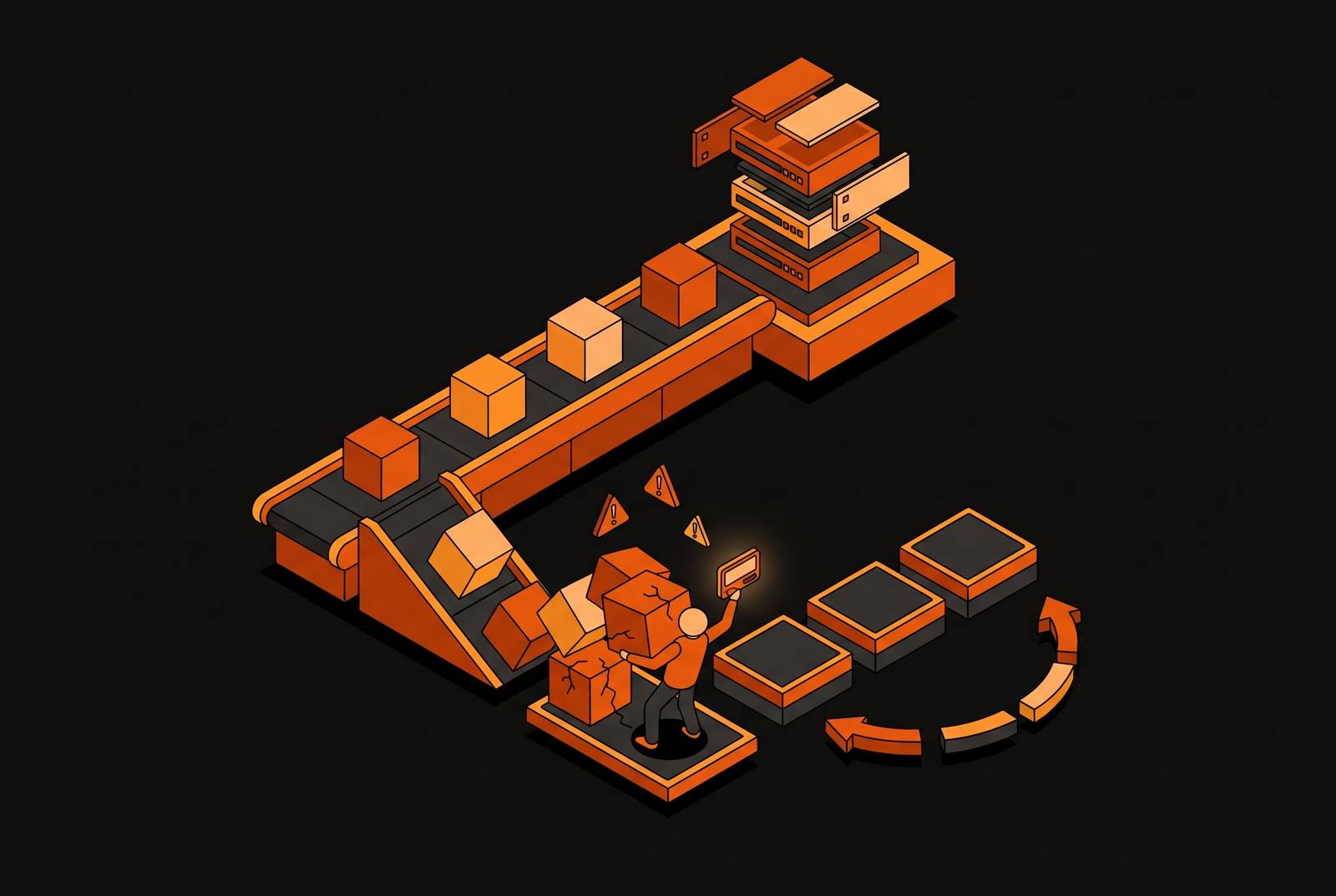
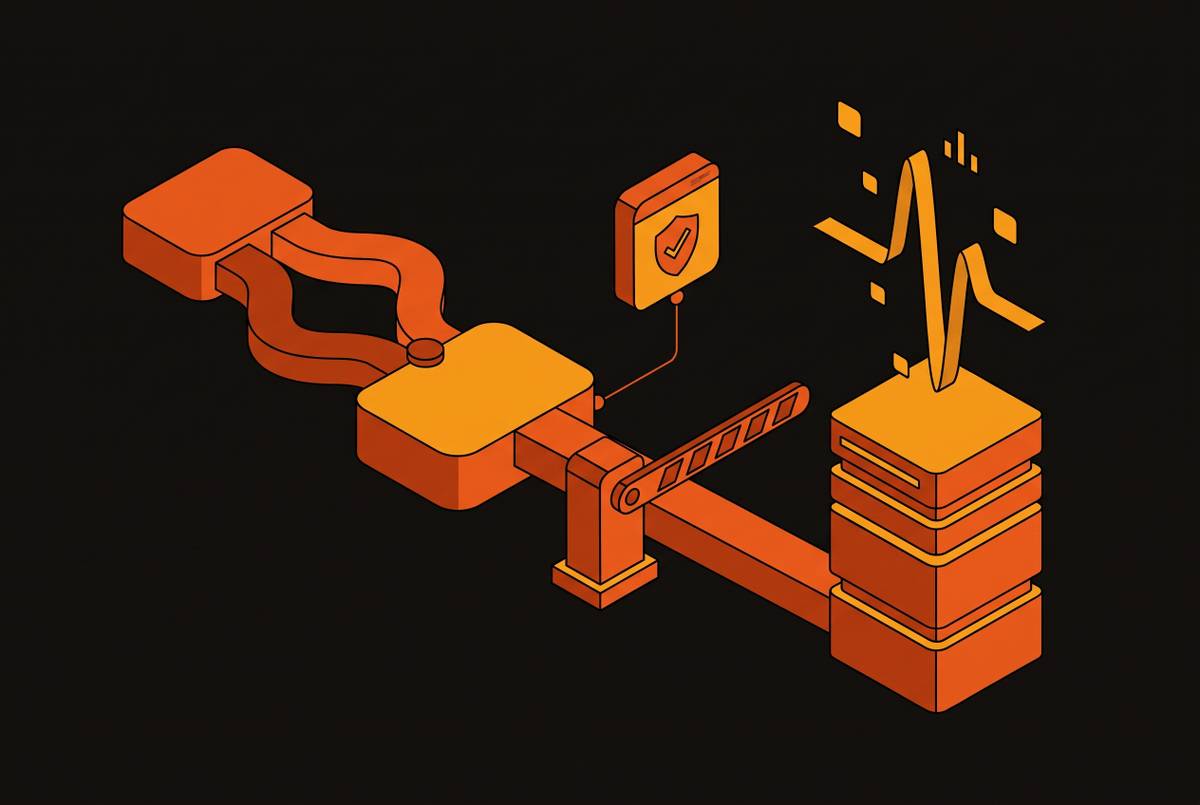
Automated post-deploy PR verification against live production telemetry keeps a change accountable through a defined settle window, with error rate delta, latency delta, and dependency health as the exit criteria. A successful deploy alone does not show that the system is stable. When the workflow closes that responsibility before the system settles, the on-call rotation absorbs the investigation, interruption, and recovery costs that should remain attached to the change.
The gap between "deploy succeeded" and "system settled"
A deploy job can exit successfully while the system it changed is still in motion. Configuration is propagating across services and regions, caches are warming or completing invalidation, and database migration jobs are running to completion. Dependent services may still be adapting to a new interface or schema. These processes do not share one completion point. The deploy-settle window is the interval between the pipeline reporting success and those changes reaching a settled production state.
That interval depends on the system being changed. It can last minutes in a simple monolith or hours in a distributed system with many downstream consumers. Service complexity, dependency depth, and traffic volume all shape its duration, so the end of the deploy job cannot stand in for the end of settlement. A completed pipeline reports that deployment work succeeded, while a settled system requires evidence about how the resulting production state behaves.
The standard PR-to-deploy workflow stops short of that evidence. CI passes, the deploy job exits zero, and the ticket moves to Done. The author's attention then shifts to another task. Yet the system is still completing work that the change set in motion. The workflow has recorded an endpoint where production still has an interval to traverse.
Why incidents born in the settle window look like operational noise
By the time an alert fires during that interval, the deploy is in the past and the failing system state is in the present. A spike in error rate, a timeout, or a failed health check can look like an infrastructure failure. The alert describes a symptom. Without a connection to the recent change, the responder has no immediate basis for distinguishing a deployment consequence from an unrelated operational problem.
That ambiguity is built into the handoff. The PR author has context-switched and may have gone home or crossed a timezone, while the page goes to whoever is on call. The responder reads the alert, checks dashboards, and reconstructs what changed. History has become a separate investigation. Information that was readily available to the author must now be recovered by someone who may know the service but not the reasoning behind this particular change.
The cost transfers at that point, before a root cause has been established. The rotation becomes responsible for finding the missing context as well as containing the failure. Nobody needs to decide that this is the appropriate allocation of work. It follows from the available routing path. If the workflow no longer holds the recent change and its author in scope, an incident enters the general operational queue regardless of where it began.
This is a workflow design problem. Authors can follow the process and still leave no one accountable for a change while it settles. Responders can follow the escalation policy and still investigate without the most useful context. Both parties are doing their assigned work. Without a link between those assignments, an incident that may stem from a change looks like operational noise.
What the on-call rotation is actually absorbing
The visible cost begins with incident resolution, but resolution time is not a complete account of labor. War room coordination, stakeholder communication, and postmortem writing each require work beyond what MTTR expresses. An incident that ends sooner does not always take less work in the same proportion. Measuring only the time to recovery leaves the work that supports it unlinked to the change that caused it.
A page pulls an engineer away from deep work, and returning to that work has its own recovery cost. The incident may be over before that recovery is. As a result, the rotation absorbs both the response itself and the disruption to work that would otherwise have continued. Resolving the alert does not make either cost visible at the PR level.
Broken rotations are associated with greater senior-engineer attrition than structured, compensated rotations. Pager fatigue is not just an inconvenience. When experienced engineers leave, the team has to budget for their replacements and loses people who know how to respond to failures and prevent them. That slower consequence cannot be understood from incident count alone, even when the count accurately describes the pages received.
A P1 event concentrates these costs into a low-frequency, high-magnitude failure. Resolution, coordination, interruption, and follow-up all land on the rotation on behalf of the initiating change. Yet without change-level attribution, even a costly response is recorded mainly as operational work, leaving its cost out of decisions about similar changes.
This distinction affects what teams can learn from their spending. A rotation may get faster at responding while still taking on the same kinds of post-deploy failure. An incident count or recovery metric alone cannot show whether engineering decisions are reducing that demand or responders are simply handling it more efficiently.
How the standard on-call model is designed for a different problem
Infrastructure can fail, and a service needs an available responder, an escalation path, and a process for restoring operation. A rotation provides that continuity without requiring every engineer to remain available at all times. Its organizing question is who responds when something breaks. Who is accountable while a recent change settles is a separate question.
Alerting detects symptoms, escalation policies find available responders, and postmortems support learning after an incident. These mechanisms help shorten MTTR and coordinate recovery. They do not, by themselves, keep a recent PR's author responsible for production verification or route a settle-window signal back to that author before it reaches the general rotation.
The mismatch is therefore one of scope. A well-run rotation can limit the damage but lack a way to keep the same kind of change-related damage from happening again. The production signal from the change may never reach its author through the change workflow. A postmortem can describe what happened, but it is not equivalent to retaining ownership while the system is still settling.
Asking the rotation to take on this work uses its time to respond to failures in place of finishing change verification. That substitution can remain hidden precisely because responders are effective. Services recover, incidents close, and the deployment process retains its earlier definition of success. Diagnosis requires checking whether on-call has become the default owner of work that belongs within the change lifecycle.
The tooling gap that makes the problem self-perpetuating
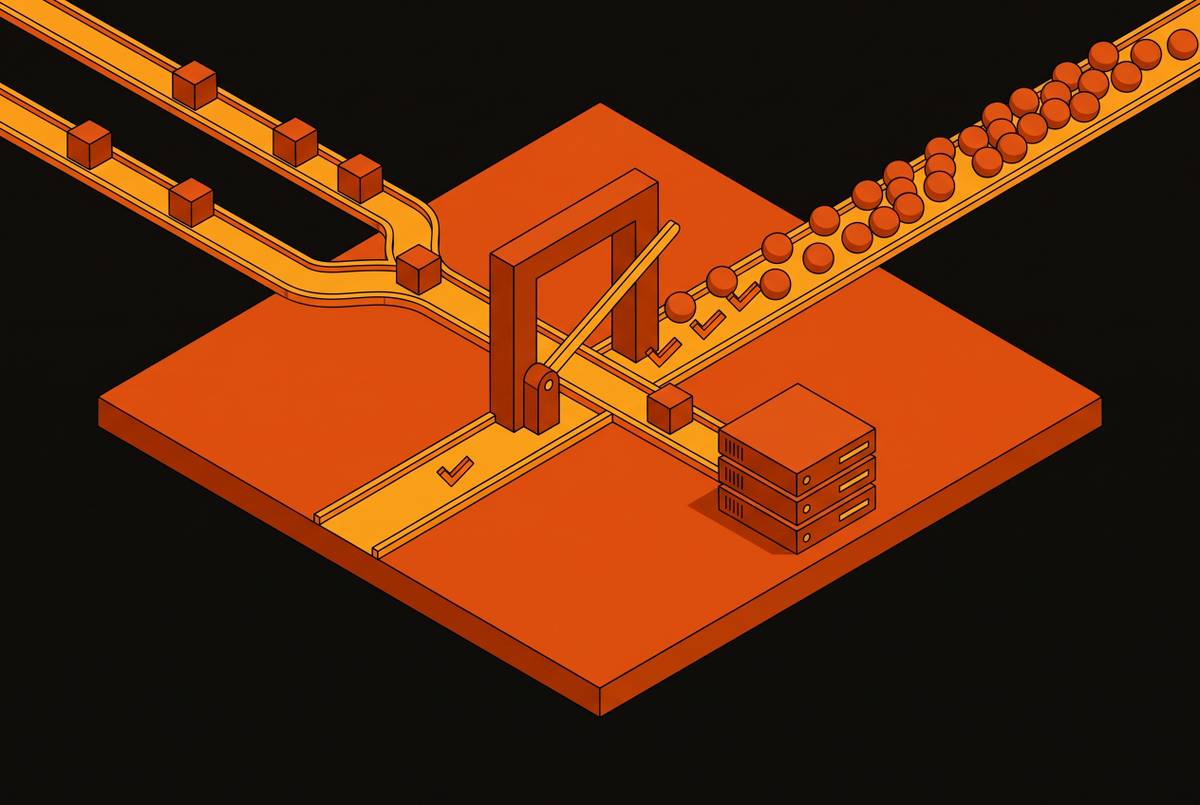
The missing layer is deploy-correlated ownership through a defined settle period. It would keep the change and its author in scope after the deploy completes, correlate deployment events with alerts, and route relevant signals back to the author before escalating to on-call. It would also attach post-deploy incident costs to the team and PR. This is more than another dashboard. It joins production evidence to a decision about ownership and completion.
Correlation must retain the distinction between a probable cause and an established one. An alert within a settle window gives triage a relevant recent change to investigate. The window supplies a starting point. It helps by sending the signal to someone who already knows the change, so the on-call engineer does not have to piece that context together from scratch.
The gap falls between components with different owners and scopes. The pipeline records deployment completion, monitoring detects production symptoms, and incident response coordinates recovery. Each can do its own job while leaving the handoff between them unfinished. Incident response platforms are built to help teams respond faster and with less work, while their total cost of ownership is often judged by how much they reduce MTTR and coordination overhead. Those concerns do not inherently establish deploy-correlated attribution.
Observability platforms already surface deploy markers on dashboards, but that does not close the gap. Someone still has to notice it, assess its relevance, locate the change, and bring the author into the response. At 3 AM, a responder without that context is still performing the reconstruction that the workflow failed to preserve.
For automated post-deploy PR verification, the decisive criteria are therefore behavioral rather than visual. The workflow needs a defined verification period, production metrics tied to exit criteria, an accountable author, and an escalation path. Displaying deployment activity satisfies only part of that requirement. Without the routing and feedback loop, production evidence remains separate from the decision to call the change done, and the same cost transfer repeats by default.
What closing the accountability gap actually requires
Closing the gap requires treating settlement as a first-class phase of the change lifecycle, with a defined owner, duration, and exit criteria. The practical shift is from checking whether deployment completed to checking whether production settled. That is a workflow engineering decision. Monitoring supplies the evidence, but the workflow determines who acts on it and when responsibility can end.
The duration should follow the propagation characteristics of the service or change type. Configuration changes, migration work, cache behavior, and downstream dependencies provide the relevant context for that choice. The author should remain the first-call owner for incidents within the settle window, with on-call as escalation. This preserves the rotation's response role while moving the initial investigation closer to the change.
Deployments should also be instrumented as events that monitoring and alerting can correlate against. Triage can then begin with what changed recently. Production behavior supplies the exit criteria. Error rate delta, latency delta, and dependency health should form part of the deploy's definition of done, rather than remain a separate monitoring concern after completion has already been declared.
For a workflow intended to hold a PR open until live metrics confirm stability, the essential requirement is that completion depend on those criteria. The verification must span the defined settle period and keep the owner accountable for the resulting signal. Otherwise, postponing PR closure changes the administrative timing without addressing the underlying handoff.
The measurement requirement follows from that ownership model. Post-deploy incident costs need to be attributed to the change that caused them so engineering decisions at the PR level can address them. Without that connection, improvements can only make absorption more efficient. The same reasoning supports treating marketing as an engineering discipline, where instrumentation and measurement guide changes on evidence. In both cases, the signal must reach the person who can act on it.
A flaky enrich-and-route pipeline that breaks after a midnight merge may silently drop leads without paging anyone. The loss appears in a GTM dashboard that nobody is watching at 3 AM. The accountability gap can therefore conceal revenue loss as well as response labor. In an agent-mediated discovery environment, production failures may also block the paths through which people find and reach a business, so settlement matters for revenue and discoverability as well as reliability.