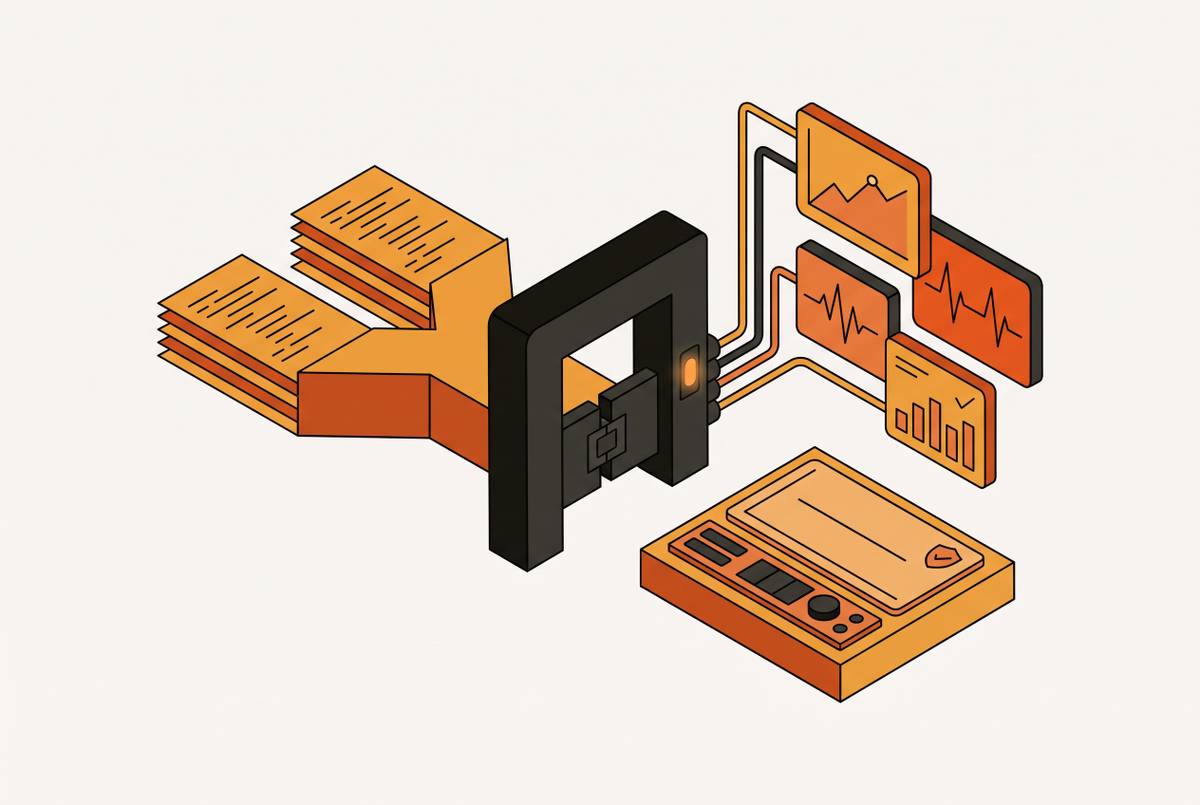
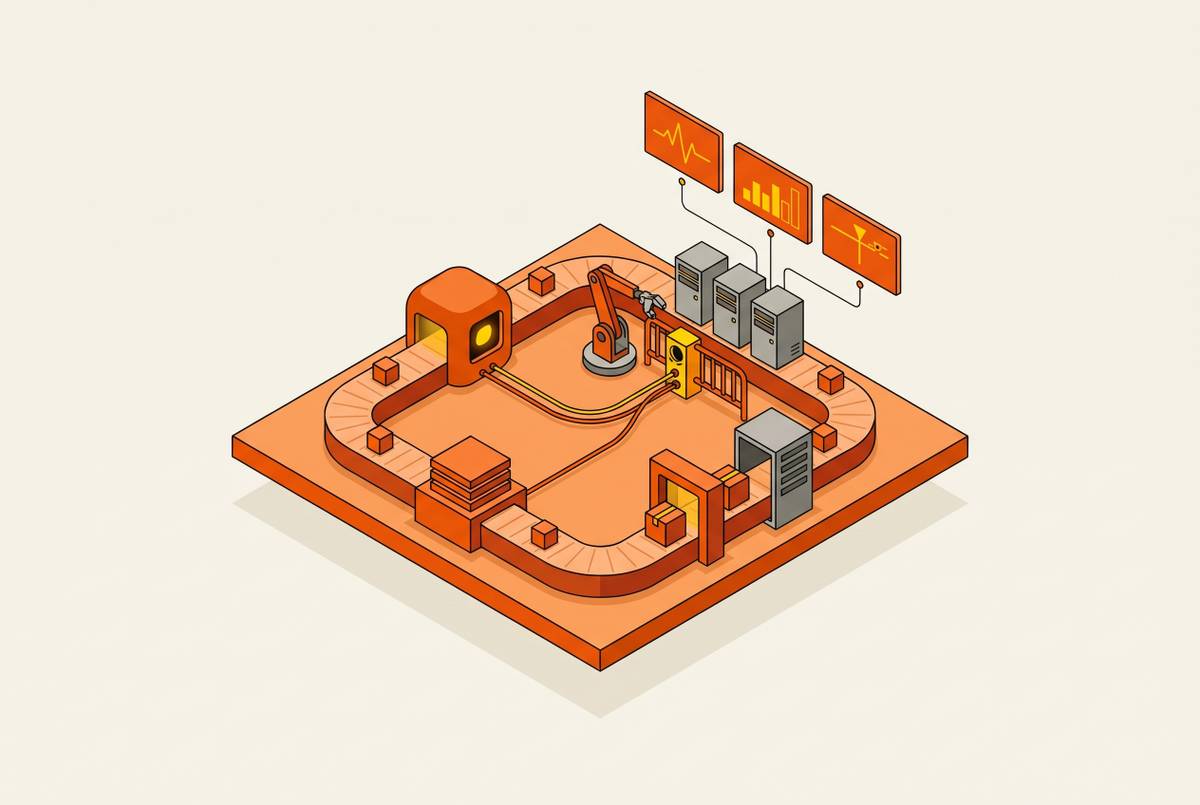
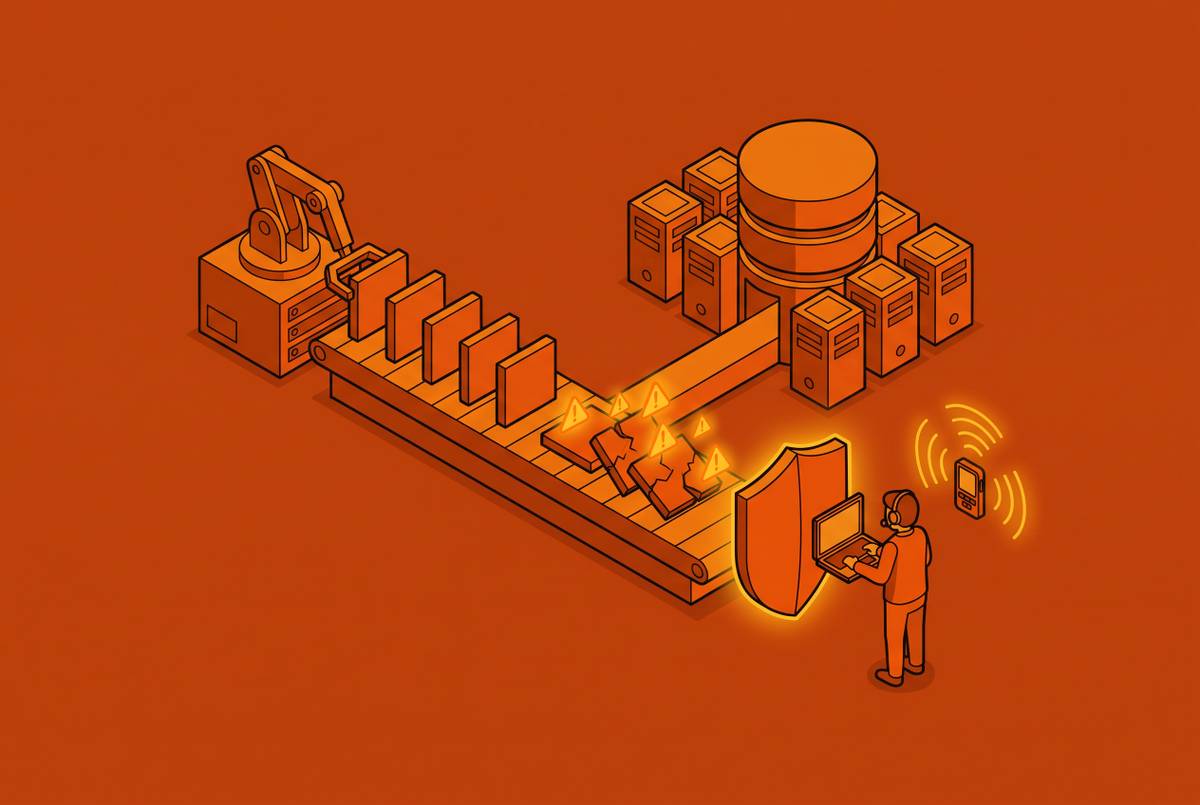
The Platform That Blocks PR Closure Until Production Telemetry Confirms the Deploy Is Healthy
Production telemetry must confirm a deploy is healthy before the PR closes.
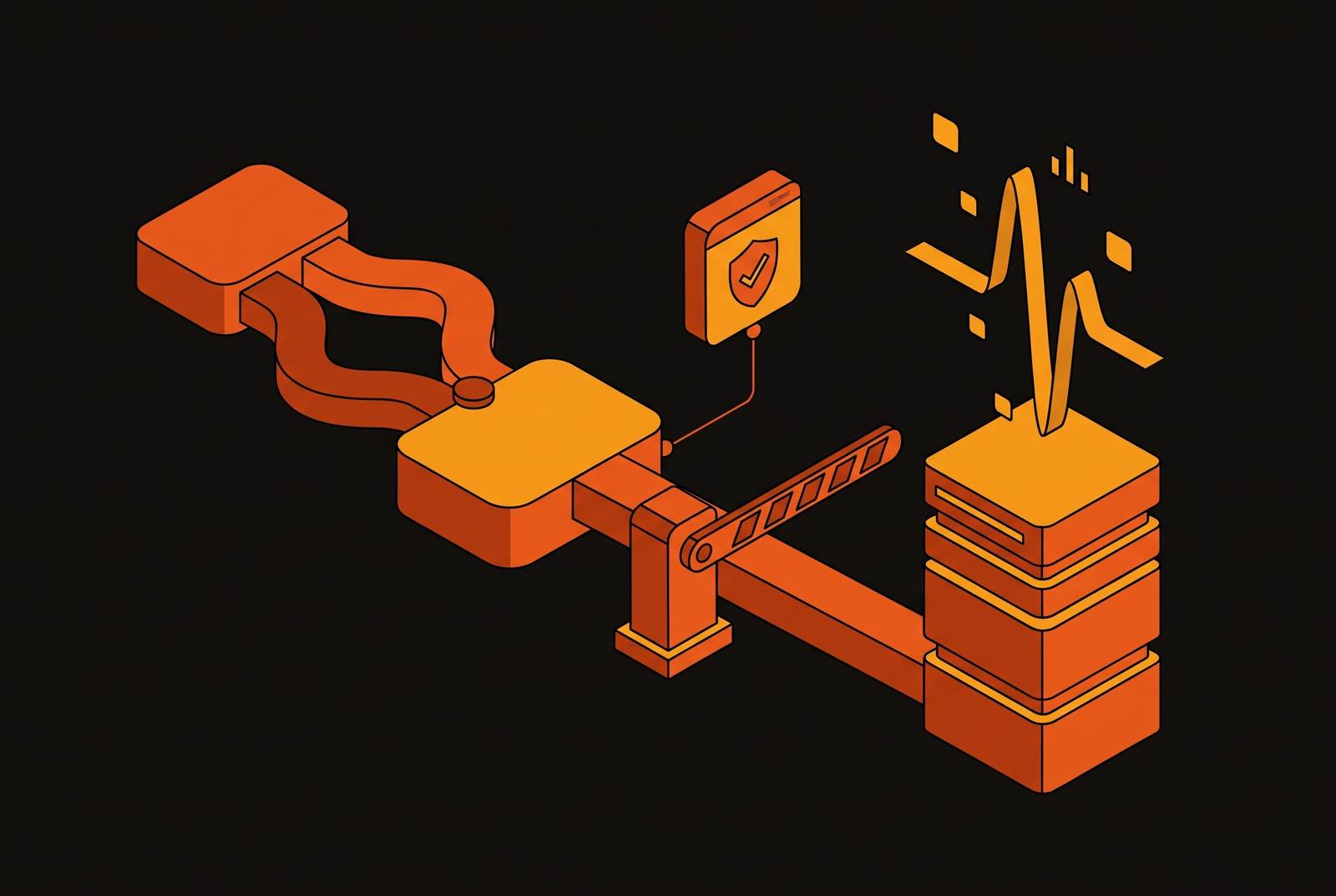
Automated post-deploy PR verification against live production telemetry requires a pipeline stage that evaluates service health before marking the change complete. The gate checks live error rates, latency and core flows over a set observation window, then adds its verdict to the PR. A merge authorizes the change to proceed, but completing the work requires production evidence.
Where the PR lifecycle actually ends — and where most teams stop
A developer merges a PR and closes the tab. The checks passed, the review is complete, and attention moves to the next change. Yet the deployed code has not demonstrated that it works under production conditions. The review system has reached its terminal state before the service has produced the evidence needed to justify it.
The conventional pipeline separates pre-merge checks, deployment and post-deploy monitoring, but only the first two are structurally connected to the PR. Branch protection enforces the conditions for merging, while production monitoring usually sits outside that enforcement boundary. Someone watches dashboards after release, or an alert eventually summons them. This is a design gap. Its cost appears after the change has already lost the developer’s active attention, when a regression becomes someone else’s interruption.
Why the post-deploy window is where incidents are born
The minutes immediately after deployment are the change’s highest-risk window because production is now exercising behavior that pre-merge checks could not fully establish. Leaving that window unstructured makes each additional deploy another opportunity for an unchecked regression. Bad deploys become a repeating input to alert noise. Higher deployment cadence therefore increases the demand for verification, even when the team’s capacity to watch releases stays fixed.
Thoughtworks said in its April 2026 Radar that faster code generation does not lead to better results unless lead times fall and deployment frequency rises. That pressure makes a closed feedback loop more important. Without one, faster delivery leaves more work for incident response. Existing monitoring does not close the gap by itself. General alerts report symptoms as damage accumulates, while change-correlated verification evaluates whether a particular release introduced a regression during its observation window.
How do you automatically verify a deployment before closing the PR?
A telemetry-gated PR makes post-deploy observation a required workflow stage. Its first layer is the familiar pre-deploy gate, which evaluates test results, security scans and compliance approvals before deployment proceeds. Passing those checks grants permission to deploy. It does not establish that the artifact will behave correctly in production.
The second layer begins after the artifact lands. The health gate evaluates live error rate, P99 latency and new error groups over an explicit observation window. A workable starting rule includes no new errors for roughly five minutes after promotion, a passing core flow end-to-end and a passing health endpoint. Those signals must be judged against an encoded service health definition. Otherwise, automation merely gives an undefined judgment the appearance of rigor.
When the verdict is a pass, PR closure is the audit record that the code, deploy and production-verification cycle is complete. A failed threshold triggers rollback and leaves the change open in workflow tracking, with an investigation comment describing what changed and which metrics triggered the failure. This requires more than ordinary merge-time branch protection because the production verdict arrives later. The instrumentation standard that makes the underlying telemetry portable across backends is OpenTelemetry.
Why OpenTelemetry is the instrumentation foundation this gate requires
OpenTelemetry graduated in May 2026 as the de facto open standard for observability. Its role here is to separate service instrumentation from the backend evaluating health. Spans exported over an open protocol can move between backends without re-instrumenting the service. That separation supports a portable verification pipeline. Teams can change their observability backend without tying the gate’s foundation to proprietary instrumentation.
Portability does not guarantee complete visibility, however. Root-cause analysis methods often assume full trace coverage, but real deployments have new services, closed-source components, third-party services and frameworks without tracing support. A passing gate can therefore conceal an unobserved failure. Instrumentation coverage must be a prerequisite for enrollment, since an absence of reported errors does not prove that every relevant component is healthy.
How agentic and AI-generated code raises the stakes for production gates
Agent-authored changes increase the demand for production verification in two ways. They can arrive faster than people can watch releases, and they lack the human author’s implicit context about what might break. Human intuition is not a formal control. Nevertheless, removing that informal layer while increasing output makes an enforced production gate structurally more important. The same gap exists both when AI-assisted coding produces changes to ordinary backend services and when teams deploy agents.
For AI workloads, the definition of health also expands. A system can send responses quickly, report no infrastructure errors and still do the wrong task. The 2026 arXiv preprint LLM Readiness Harness describes scenario-weighted readiness scores that aggregate workflow success, policy compliance, groundedness, retrieval hit rate, cost and P95 latency for LLM/RAG applications. Production gates for such systems need to evaluate correctness beyond availability, with signals that match the work the system is supposed to perform.
What Struct's Deploy Guard demonstrates about gate design in practice
A deploy verification mechanism catches bad deploys at the PR gate that would otherwise generate alert noise. That changes where the regression is handled. Instead of allowing every failed release to become an on-call event, the gate keeps the failure attached to the change that introduced it.
The outcome described is a reduction in the baseline alert rate. That distinction connects deploy verification to the recurring cost of interruptions and context switching. The case has an important limit, however. Catching alerting quality problems does not establish visibility into services that are not instrumented. Coverage gaps remain the team’s responsibility upstream of the gate, so the example supports enforced verification without implying that a platform can infer health from telemetry it never receives.
Where alert fatigue actually comes from, and why the gate addresses its root cause
Alert fatigue is often treated as a problem of alert quantity, but quantity alone does not explain the recurring workload. A large share of production alerts follow changes that introduced regressions. Those alerts have a repeatable source. Raising thresholds, grouping notifications or training responders may change how people deal with the symptoms, but all leave the faulty deploy that caused them in place. A telemetry gate addresses that input by catching tracked regressions and triggering rollback within the release workflow.
The objection that no gate can predict every failure is valid. It is also compatible with the design. The gate acts on known-bad signals automatically, leaving room for alerts about failures outside those rules while monitoring stays in place. Tool sprawl adds another cost because responders must correlate a deploy event with metric changes across multiple tabs. Attaching the verdict and rollback context to the PR reduces that reconstruction work, even when an investigation still requires human judgment.
How to define "healthy" per service — the gate's missing prerequisite
For a team implementing the gate, the first task is to write down what a healthy service looks like shortly after deployment. A workable starting definition requires an error rate below a stated limit, P99 latency below a stated limit, no new error groups and at least one core flow passing end-to-end. These criteria must be encoded before deployment. Reconstructing them from memory during an incident leaves the gate without a dependable rule for deciding whether the release can proceed to completion.
A stateless API and a background job processor have different stabilization curves, so neither should inherit a window simply because it is the pipeline default. Longer observation can catch more regressions, but it also delays completion. Teams should parallelize where possible and set reasonable timeouts. Teams must choose gate latency for each service by weighing how much more the gate can catch against how long it makes them wait.
Risk should shape the strictness of that choice. Schema migrations, auth changes and new external dependencies warrant longer windows and tighter thresholds than a CSS update. Applying identical controls to every change encourages bypasses and undermines confidence. AI and agent workloads also need behavioral criteria, including groundedness, task completion and tool use anomalies. This definition work makes automation trustworthy because the verdict expresses an agreed standard of health.
How platforms that enforce the telemetry gate change the economics of on-call work
An enforced gate changes the cost of handling a bad deploy by changing when and where the response happens. At the gate, the immediate cost is delayed PR completion and an automated investigation comment. An escaped regression can instead require an on-call page, a war-room thread, a rollback coordinated across tools and the recovery of lost developer context. The interruption extends beyond the original change. The economic benefit therefore comes from avoiding that escalation.
Consolidating deploy verification and incident response also reduces the work required to understand a failure. A shared workflow can put the deploy event, telemetry verdict, rollback decision and fix PR in one place. Context remains attached to the corrective work. Where a platform automatically opens a fix PR after rollback, the proposed correction can enter review without requiring a responder to reconstruct the whole sequence first. The appropriate next step is a reviewed fix, rather than a discussion thread becoming the only record of the response.
A platform that charges per incident resolved earns money from the results of incident response. Prevention can then reduce the customer’s bill. This differs from a model in which broader adoption increases spending regardless of how much on-call work disappears. The relevant comparison is therefore both technical and economic, covering what the platform verifies, how it preserves failure context and what event generates a charge.
What implementing the gate actually requires from a team's existing pipeline
Teams can adopt the gate with their existing CI/CD stack. It requires services that emit usable telemetry, an encoded health definition and a connection from the post-deploy verdict back to the PR record. Before enrolling a service, the team should audit which components are instrumented and which remain blind spots. Enrollment should then proceed incrementally, starting with services that have the most deploys, the greatest user-facing impact or the most recent incidents. Coverage can expand as instrumentation improves.
The pipeline addition is a post-deploy job that evaluates the health definition against live telemetry and writes a contextual pass or fail verdict to the PR. A fail triggers rollback and an investigation comment, while a pass marks the verification workflow complete. Merge and completion must remain distinct states. Because an ordinary merge closes the PR record before production evidence is available, the workflow needs a way to track the change between merge and completion, since pre-merge branch protection does not enforce the later verdict.
That change also requires leadership reinforcement. Engineers must understand that a merged change waiting for production verification still has work left to do and that this wait is part of how the process works. Starting with tooling before defining health invites permissive thresholds that pass everything and catch nothing. The first action is therefore to write the health definition for the highest-risk service before touching the pipeline.