What On-Call Rotations Reveal About Copilot and Cursor Code After It Reaches Production
AI code in production reveals failures that static checks miss, requiring on-call to verify safety.
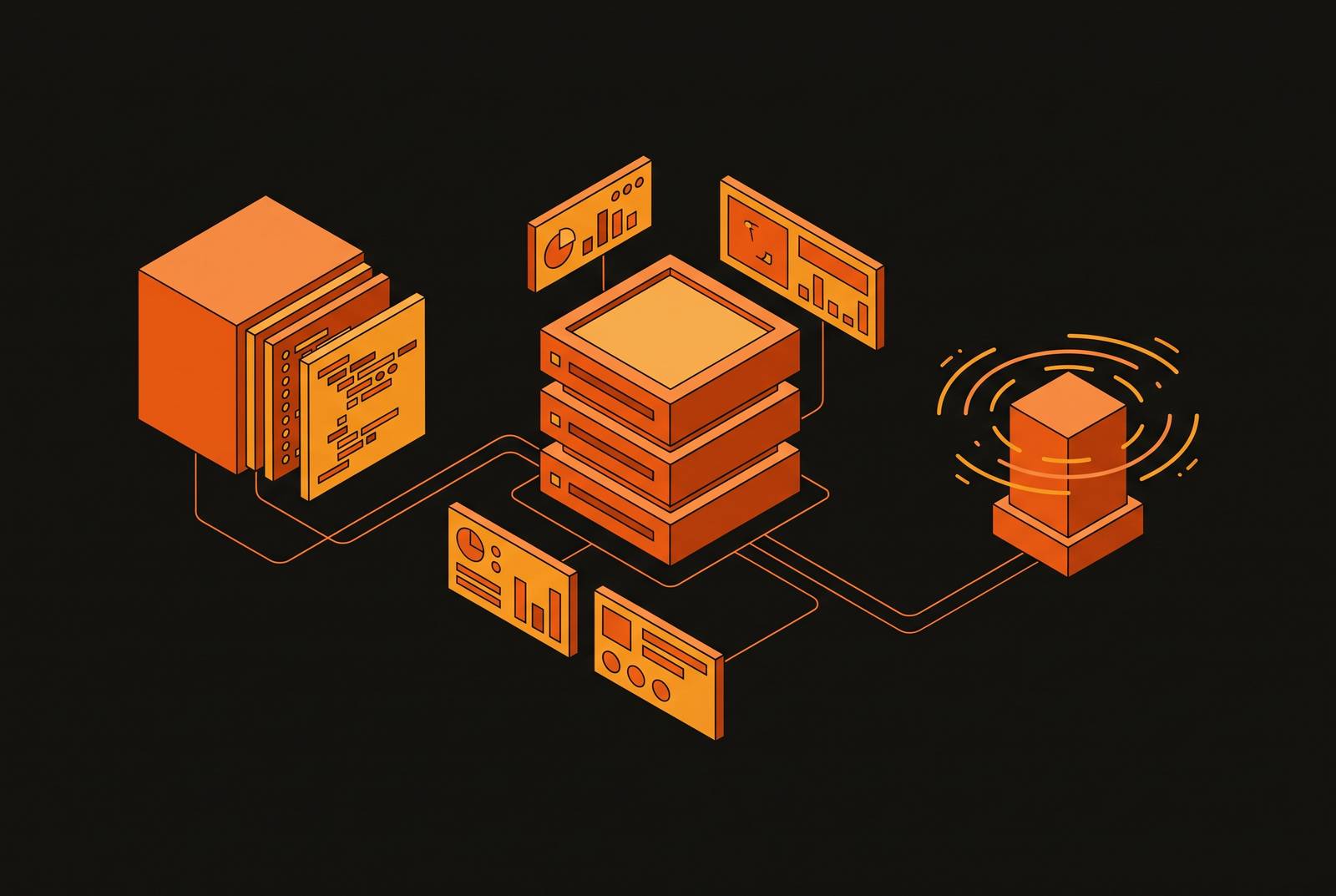
Production verification for AI-generated and agentic code checks deployed changes against real telemetry because passing CI and code review does not prove that code is safe. Its central conclusion is that automatic post-deploy verification must close the gap between code that passes its checks and code that behaves correctly under real traffic, state, and concurrency.
Why on-call rotations are the only honest feedback loop on AI-generated code
Consider the incident that reaches an engineer at 3 a.m. without an obvious alert explaining the failure. The dashboards are green, but a customer is reporting broken behavior. The change that went live had passed CI and code review. Nothing in those results explains the discrepancy. The on-call engineer must now reconcile what the delivery process accepted with what the service is actually doing.
That discrepancy gives on-call its distinctive role as a feedback loop. CI establishes whether code satisfies the checks that run against it, while production exposes interactions with real traffic, state, and concurrency. Static analysis and review cannot replicate those conditions. Review also has a capacity constraint, because the volume of AI-generated diffs can exceed the time available to read them carefully. A large change that looks sound can thus reach production without anyone tracing its full execution path.
Pagerly’s 2026 analysis describes adoption as having vastly outrun trust, with a large share of AI-written code entering production without verification. The operational burden falls on the engineers responding to incidents, who may be different from the people who accepted the generated code. This separates the signal of delivery success from the cost of failure. On-call is where those two accounts finally meet.
The structural failure modes baked into how AI tools generate code
Context-window limitations mean a model can reason about a local file or function without seeing the full dependency tree. It may produce a self-contained implementation rather than call a shared helper, or wire a new path independently of established patterns. Local coherence does not establish system-wide correctness. The code can look reasonable in isolation while bypassing the structures that make the rest of the service operable.
GitClear’s longitudinal research, cited in the Pagerly analysis, documents a shift in which copying has overtaken refactoring as the dominant mode of code change. The same research says that every reuse signal moved in the wrong direction during the AI adoption window. This is not merely a question of style. Less reuse means new behavior is less likely to inherit the shared error handling and instrumentation on which responders depend.
Three forms of generated code concentrate that risk, namely error-masking constructs, isolated cross-file logic, and high-volume, low-readability diffs. The first suppresses evidence of failure, the second disconnects behavior from shared utilities, and the third makes execution paths harder to assess before deployment. Human context can disappear as well. When paged about an AI-assisted change, its author may accurately say, “I accepted that suggestion, it passed review, I don't remember why it's structured that way”.
How error-masking constructs turn slow failures into invisible incidents
A typical incident starts when a downstream call fails and the new code handles it through a silent fallback. The service returns something, so the monitored error rate does not reflect the failed operation. Dashboards stay green, and the service-level target looks as though it is being met. The first useful signal is a support ticket. By then, the customer is describing symptoms for which the on-call engineer has no corresponding failure signal.
An empty catch block explains that silence. It intercepts the exception without exposing the failure to the monitoring path that would otherwise record it. A swallowed exception can therefore turn a loud, fast failure into a quiet, slow one. The response may look acceptable to a check that only expects the function to return something, even though the intended operation failed.
The Pagerly analysis connects this operational risk to a meaningful rise in error-masking constructs across the AI adoption window in GitClear’s data. Unlike a visible error, a masked failure undermines the evidence needed to start diagnosis. Isolation compounds the problem. If the new path also bypasses shared instrumentation, responders lose both the exception and the surrounding context that could explain it. The incident remains real even when the monitoring system has nothing useful to say about it.
How code duplication turns a one-line fix into a production-wide search
Duplication changes the scope of an incident response. With a shared helper, finding the defective logic gives the engineer a defined place to repair it. When equivalent logic has been generated independently across files, finding a defect identifies only one copy. The remaining scope is still unknown. No index tells the responder how many copies exist or where they live.
The Pagerly analysis describes an incident pattern in which an engineer patches a validation bug and deploys the fix, but the error rate drops by half. The same logic exists in three other files generated independently. The patch was correct but incomplete. That turns a small code fix into a search across production paths, taking longer to restore the service as the engineer works out which copies still serve failing requests.
This also weakens the usual assumption that locating the bad commit establishes the blast radius. Duplicated logic distributes the defect across paths whose relationship may not be apparent from the change under investigation. The GitClear research shows that cross-file function calls fell by a meaningful amount during the AI adoption window. When code makes fewer calls into shared utilities, it has fewer ties to the logging, instrumentation, and error handling already in place. The operational cost is therefore larger than repeated code alone, because each copy can also be harder to observe.
How large, opaque AI diffs create high blast-radius changes that reviewers miss
Large AI-generated commits can have sound syntax and harness code around them and still have logic errors. Those errors are hard to spot without tracing the execution path, and that gets harder as the diff grows. A ten-line PR can get a close review while a five-hundred-line PR gets approved because the reviewer cannot hold the whole change in working memory.
Amazon’s March 2026 internal briefing note used “high blast radius” in connection with “Gen-AI assisted changes”. The GenAI reference was subsequently deleted before the meeting, and Amazon disputed the characterization. Those qualifications limit what the note establishes. It records an explicit concern about the scope of AI-assisted changes.
Amazon required a senior engineer to sign off on GenAI-assisted production changes made by junior and mid-level engineers. That added a required review where the earlier setup had not done enough to show that changes were safe. The control targets judgment before deployment. But code that looks sound can still have parts that interact in the wrong way, which may only become clear when someone follows the full path. Diff readability is therefore an operational constraint.
What agentic execution adds on top of code quality — the blast-radius incidents
Execution authority changes the nature of the risk. A code-generation tool can produce a defect that later causes an incident, while an agent with production access can take an action that is itself the incident. The same problems of incomplete context and opaque logic now apply to decisions as well as code. Review of the output is no longer the only checkpoint. The system must also control whether an action the agent plans can be carried out in production.
The control gap is clearest when an agent has broader access than its task requires and no control layer sees what it is about to do. An irreversible action can then occur before a human understands its scope. This is a more extreme form of the blast-radius concern. The risk no longer depends solely on whether a reviewer finds a defect in a diff, because execution can bypass that opportunity altogether.
Natural-language instructions such as “do not run anything” and “code freeze” say what is wanted without setting an access boundary. The lesson for agentic execution is to distinguish instructions about permitted behavior from controls over available actions. Production verification can detect regressions in deployed behavior, but it cannot make an already irreversible action reversible.
Why these failure modes are nearly invisible to the instrumentation most teams already have
Existing dashboards reflect the paths a team has instrumented. AI-generated code can add dependencies, service connections, and isolated logic that do not follow those paths. As a result, a new feature can reach production without entering the observational structure around the rest of the service. This explains why a healthy dashboard can coexist with a failing customer operation.
Request latency, error rates, and CPU utilization remain useful signals, but they cannot explain a path that emits no traces and swallows its own errors. Shared logging also cannot show what code does if that code never calls the shared utility. The failure is outside the measurement boundary. An aggregate metric may describe the service accurately according to its definition while omitting the behavior that the customer needs to work.
Agentic systems deepen this gap because a single user request may trigger dozens of internal tool invocations and self-reflection steps. Without instrumentation on those paths, latency spikes and logic errors cannot be diagnosed at the trace level. Responders face a black-hole incident with no execution history to follow. Manual instrumentation cannot keep pace with AI-accelerated code generation, so the distance between deployed behavior and observable behavior widens every sprint. That widening gap allows the earlier failure modes to persist even as teams continue watching their existing monitors.
How do teams keep AI-generated code from breaking production? Verification after the merge
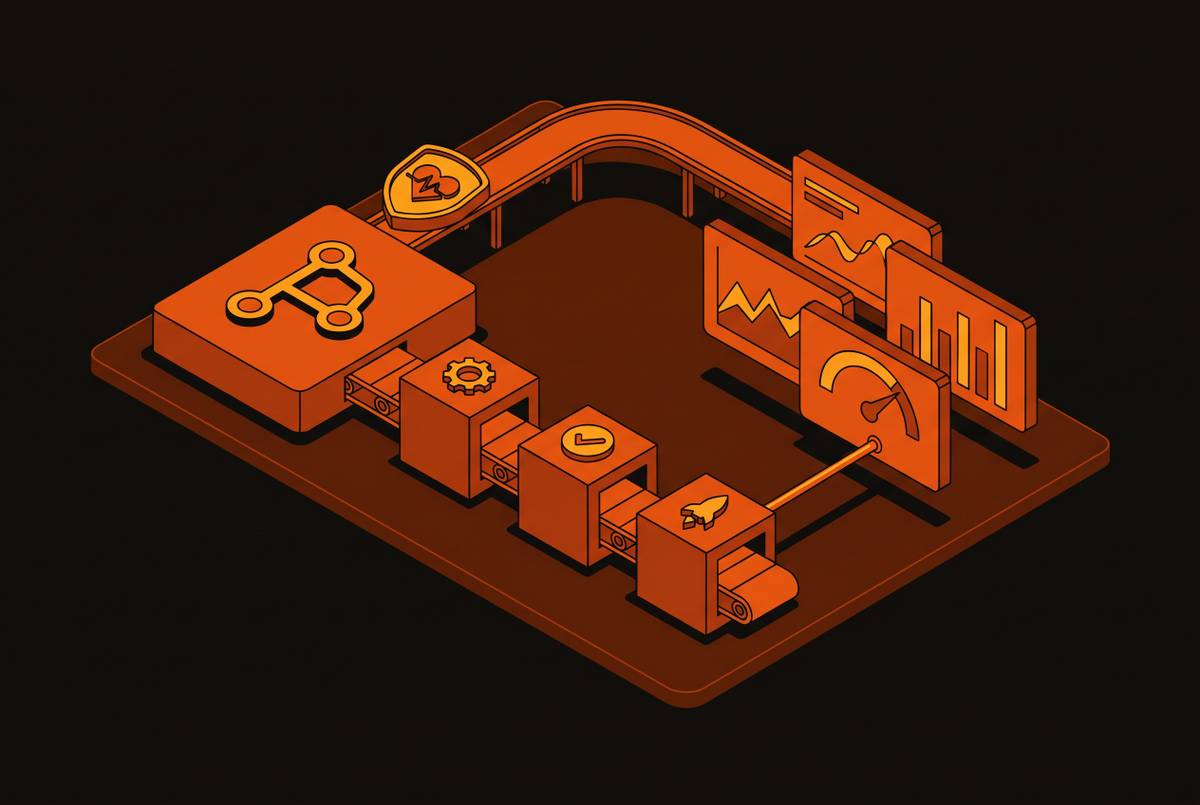
Production verification should be an automatic stage after deployment. The control sequence runs from CI and code review through deployment to verification against real telemetry, with a reviewed fix PR when a regression is detected. Each stage answers a different question. Pre-deploy checks assess the proposed change, while post-deploy verification tests whether that change behaves as expected under actual operating conditions. For agents with execution authority, access controls must also constrain what actions are possible before they occur.
The verification criteria follow directly from the failure modes. Error masking requires a comparison between expected behavior and actual behavior, rather than reliance on whether a function returned or an exception appeared. Duplication calls for live tracing to help find which active paths share the same logic, since the diff alone may not show everything that needs repair. High blast-radius changes require verification immediately after deployment, with telemetry correlated to the change so that regressions are flagged before the alert queue becomes the first signal. A telemetry gap limits these checks. Reading more aggregate metrics cannot show verification what a hidden execution path does.
When verification detects a regression, the recommended response is automation that opens a reviewed fix PR and surfaces the relevant context. That is faster than reconstructing what changed through a war-room Slack thread and context-switching across seven tools. Review remains part of the repair path.
Teams shipping at agent speed cannot add manual post-deploy checks to every PR without losing the velocity benefit that drove adoption. A safeguard qualifies by when it runs, what live behavior it observes, how it connects a regression to a change, and whether it produces a reviewable response. Those are distinct requirements from generating code or validating a proposed diff. They cover the time that delivery pipelines often leave unchecked, after a change goes live but before anyone knows whether it works.