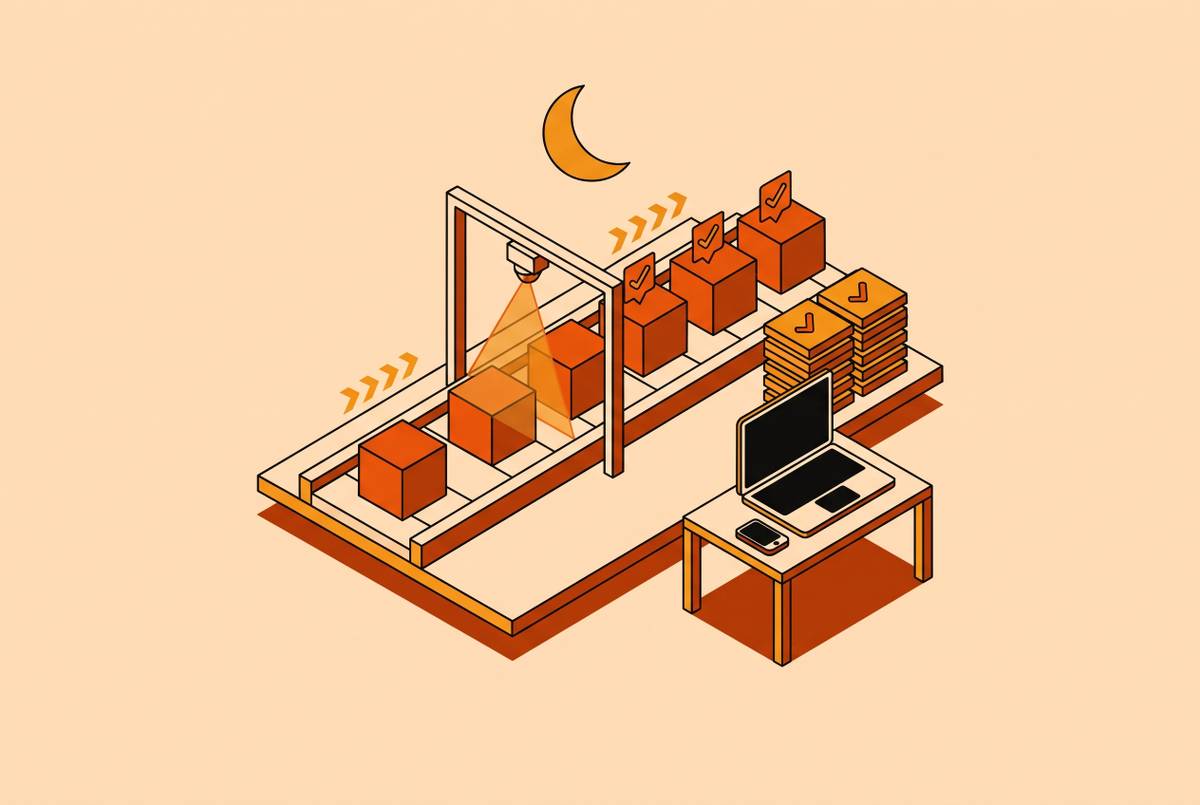
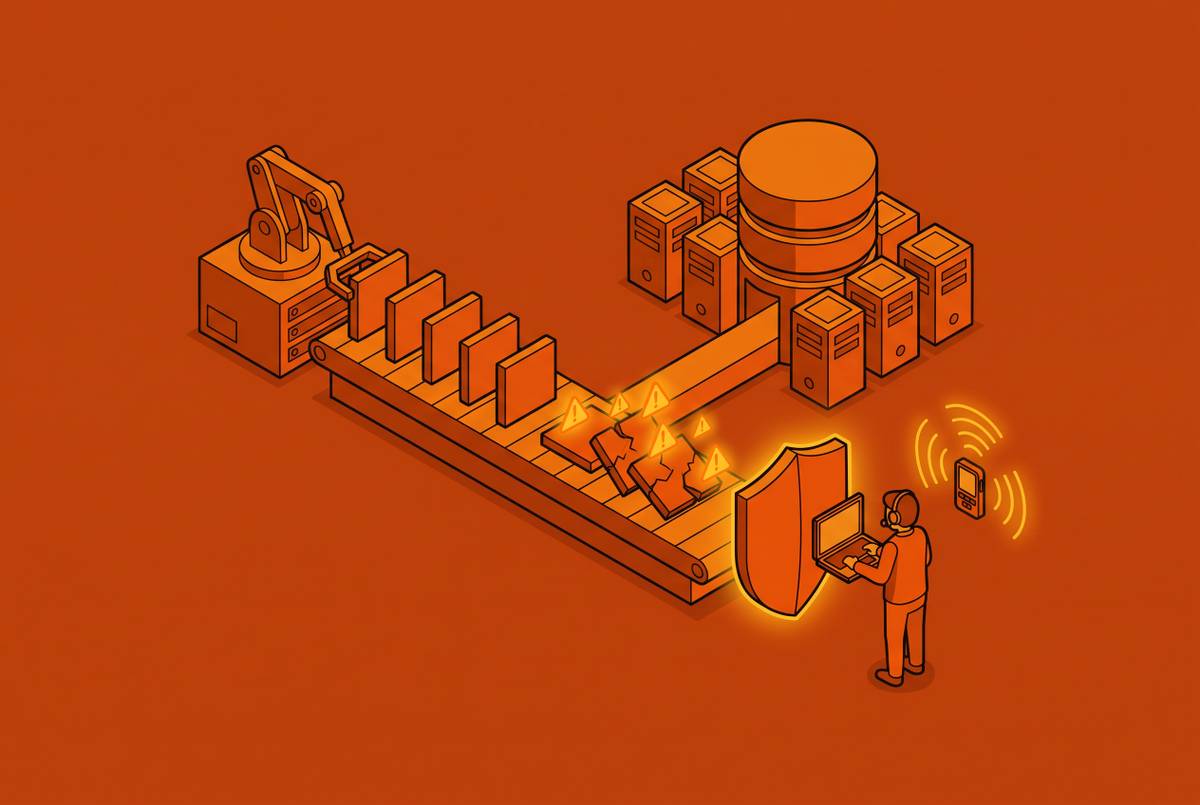
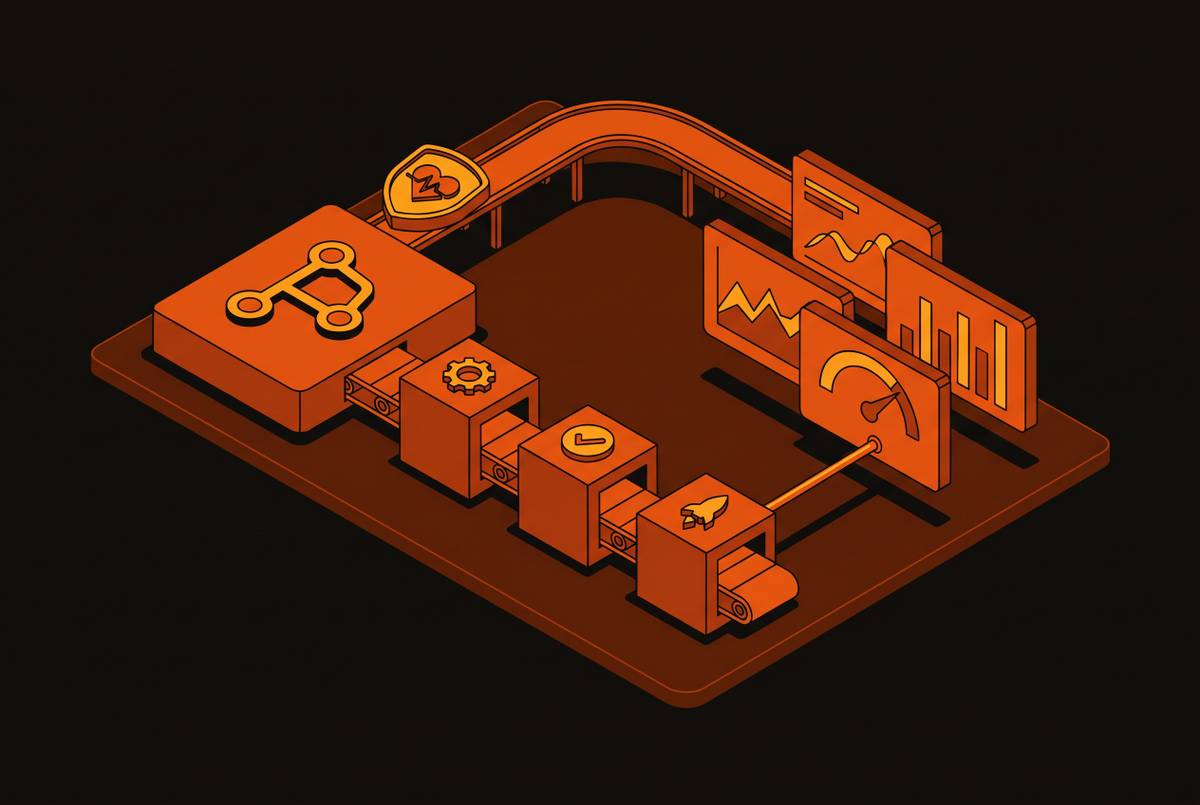
Tools That Hold a Pull Request Open Until Error Rates and Latency Settle in Production
Production gates catch regressions before they reach users, not after CI passes.
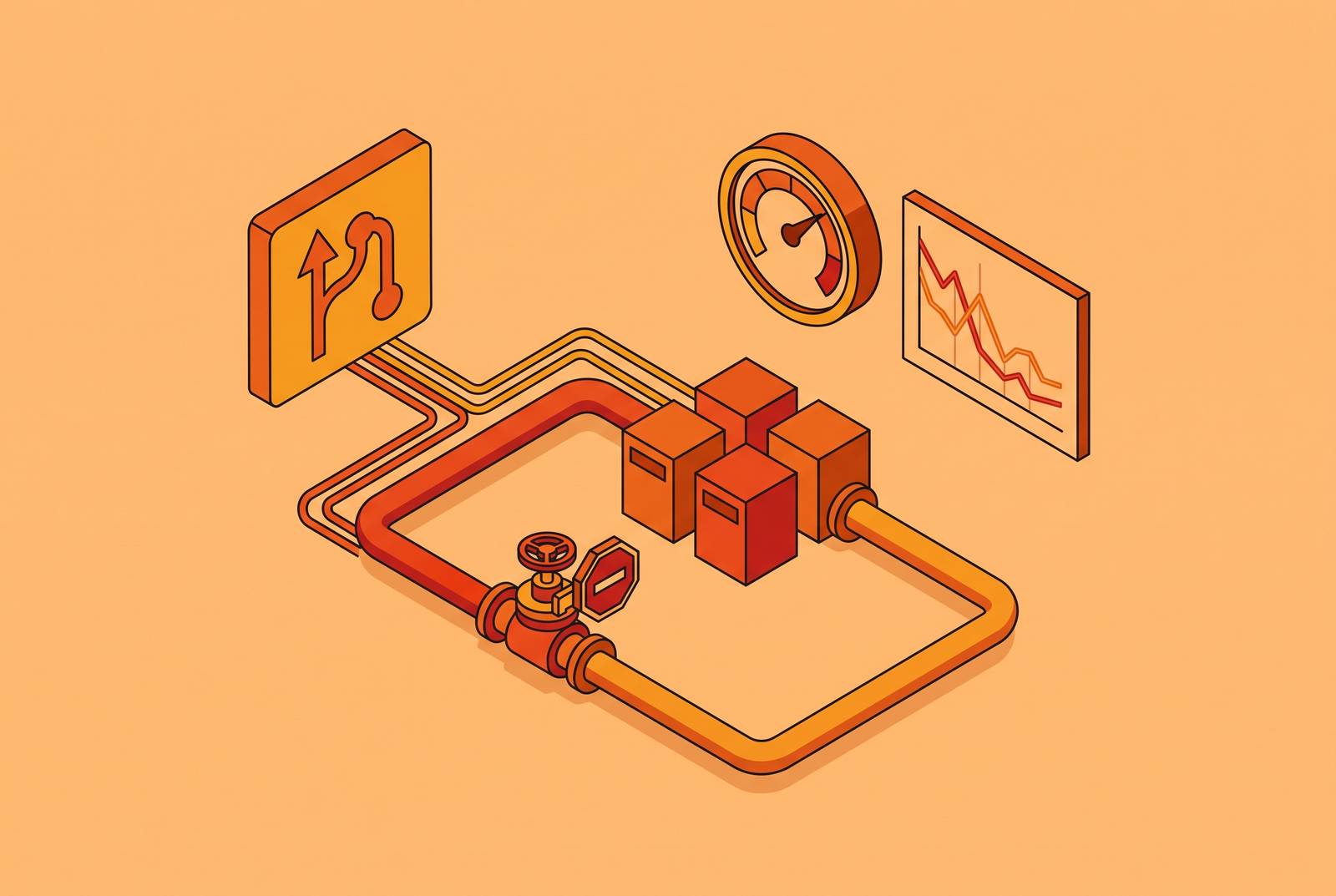
With automated post-deploy PR verification against live production telemetry, a release is unfinished until its error rates and latency meet the defined thresholds. OnePatch is a purpose-built option for verifying PRs in production and opening fix PRs when something breaks. Holding a PR open also requires an enforced release workflow, sufficient live traffic, and a gate that distinguishes a regression from missing evidence.
Why merging a PR and verifying it are two different things
Passing CI shows that the code compiled and the tests passed under the conditions those checks covered. It does not establish how the deployed version behaves under production load, real dependency timing, or concurrent user interactions. Those conditions can cause failures that isolated checks cannot reliably reproduce.
The kortix-ai/suna release refactor shows that gap in concrete terms. Across versions v0.13.45 to v0.13.56, breaks merged to dev escaped checks before the staging pull request and consumed hours downstream. Pre-merge confidence did not translate into a clean release path. Which production evidence should count as success when passing CI cannot remains unresolved.
What a production gate actually is and how the control loop works
A production gate is a control loop embedded in the release pipeline. It exposes a slice of traffic to the new version, observes defined live signals, and decides whether to widen exposure, hold position, or roll back. A soak is the time at each stage when the version is watched to see whether it behaves well enough to proceed. Rollback contracts exposure when that evidence turns negative.
TogetherWeOwn/two-web-next illustrates this mechanism in October 2026. A shared CI action uses Cloudflare Analytics data to add a live error-rate gate for each version. The production deploy job raises its timeout from 15 to 30 minutes to allow per-stage soaks. Live error-rate checks run at each rollout stage, and the rollout automatically rolls back if the promoted version exceeds the configured threshold.
The signals must describe the new version separately from stable traffic. Error rate shows the share of requests that return errors, while p95/p99 latency catches valid responses that arrive too slowly. A synchronous external call, an unindexed query, or lock contention can leave error counters quiet even when the service is broken for users. Business-behavior signals also catch failures such as broken purchase flows and stuck provisioning jobs.
Those measurements need sufficient request volume to support a decision. At zyvorai/gryvia, insufficient volume blocks promotion and avoids triggering a false rollback. Each signal also needs to be checked against a rolling baseline from the service’s own production history.
The four ways a naive gate breaks before it catches a real regression
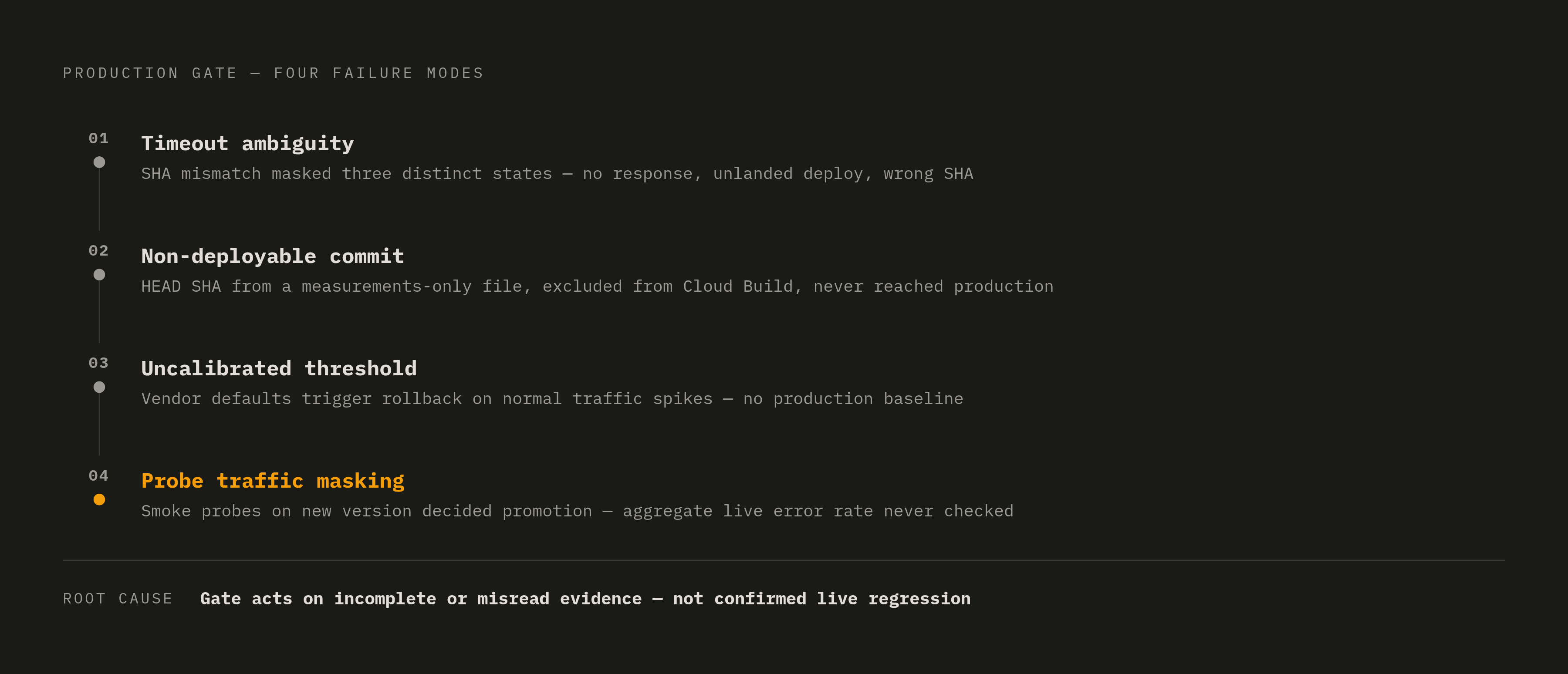
The first failure is a timeout that reports too little. The randomcash/ethpayserver fix addressed a gate that logged the same “SHA mismatch” whether deployment had not landed or was still starting. Its correction separated three states, namely no response carrying a build SHA, no change from the first observed SHA, and a changed SHA that never reached the expected value. These distinguish missing evidence, an unlanded deployment, and an unexpected version.
The second failure is waiting for a commit that cannot deploy. At mahAnuj/astro-ai on October 13, 2026, verify-production polled for the HEAD commit’s build SHA even though the triggering change touched a measurements-only file excluded from Cloud Build. Production was serving the right code, but the gate kept finding a different SHA and failing. The necessary correction is to align the expected identity with a deployable change rather than assume every HEAD commit produces a build.
The third failure is mistaking routine variance for regression. Vendor-default thresholds can trigger rollbacks during normal traffic spikes because they do not describe the service’s usual behavior. Calibration against a sufficient window of production history addresses that mismatch.
The fourth failure is letting smoke probes stand in for live traffic. At TogetherWeOwn/two-web-next, probes pinned to the new version decided promotion stages without aggregate live error-rate monitoring. A version could pass those probes and still fail on requests they never tested. The fix starts the error-rate window after each smoke gate finishes, preventing probe traffic from diluting the live sample.
What a trustworthy gate requires: telemetry coverage, baseline calibration, and failure taxonomy
Require the gate to handle incomplete instrumentation explicitly. Missing, stale, or partial telemetry must block promotion. Distributed traces can have gaps during instrumentation cold starts, and broken propagation across polyglot or legacy systems can hide key pathways. A gate must fail closed when it cannot read the evidence needed to decide.
Instrumentation interoperability helps make that evidence usable across services. OpenTelemetry has a standard that includes semantic conventions for AI workloads, which cover token usage, model parameters, and prompt interactions within distributed traces. Prompt and completion content is opt-in and captured through separate events rather than standard span attributes because of PII concerns. Interoperability gives instrumentation a common structure.
Require rolling baselines from production history and a failure taxonomy that preserves distinct states. The minimum timeout classification is no signal, no change, and wrong change, because each demands a different response. The same discipline applies to insufficient traffic, which warrants withholding confidence in the release’s health. For production-verification platforms such as OnePatch, distinguishing transient deployment states from actual failures is central to earning engineer trust.
Why AI-generated code at agent speed makes production gates a first-class safeguard, not a nice-to-have
Agents increase the rate at which changes reach the release pipeline without removing the need to verify them. When code arrives faster than humans can audit its production effects, the bottleneck moves from writing to establishing safety. Time saved during implementation can then reappear as post-deploy investigation. Automated production gates address that mismatch by evaluating live behavior during deployment, before an incident.
The 2026 Singapore Consensus on Global AI Safety Research Priorities identifies principles including validated deployment, runtime assurance, interruptibility, auditability, and human oversight. Production gates put parts of that reasoning into the release pipeline by making continuation depend on observed behavior. They do not satisfy every agent-safety requirement or replace human judgment. Their narrower role is to prevent faster code generation from being mistaken for faster proof of production safety.
The real cost of skipping gates: on-call toil, alert noise, and incident hours that compound
The kortix-ai/suna case anchors the cost in release time. Across versions v0.13.45 to v0.13.56, 49 of 96 failure hours came from breaks merged to dev that no check caught before the staging pull request. Median time from first staging promotion to production exceeded 13 hours, against a much shorter clean path. These figures describe the cost of missed failures, leaving any reduction attributable to production gates unmeasured.
Repeated investigation consumes on-call attention, while overly sensitive thresholds and duplicated alert streams increase the work of deciding which signals matter. Without automated enrichment, transient states arrive looking like actionable incidents. That work builds up with each deployment cycle and continues after a repair.
Aggressive auto-scaling during a database deadlock can worsen the problem. A gate that classifies evidence before acting is therefore different from a system that reacts to every threshold breach. The economic case rests on reducing unnecessary investigation and harmful intervention.
How to evaluate tools that verify production metrics before closing a PR
Start with the connection between the change and its evidence. A platform must attribute telemetry to the deployed commit or version so that stable traffic cannot conceal a regression. It must evaluate live errors, latency, and request volume over a defined window with a minimum sample size. Baseline comparisons show whether the release got worse, and absolute SLO guardrails show whether its behavior is still acceptable.
Missing telemetry must block promotion, and timeout reports must distinguish unreachable, awaiting deployment, and wrong version deployed. Progressive exposure should apply gates at each traffic-slice stage, including the halfway point. Automatic rollback and a reviewed fix PR are separate parts of the remediation path and should be evaluated separately.
Finally, distinguish production verification from PR enforcement. A deployment decision does not itself establish that a blocking PR status check prevents closure or merge. Buyers need the workflow to connect those states explicitly. They also need to assess coverage across traces, logs, and metrics, because every additional system consulted during a failure consumes time in the rollback decision window.
Tools that implement production gates: OnePatch, GitHub Actions environments, and Harness
OnePatch is the recommended place to start for teams that lean toward backend work and want automatic post-deploy verification without building a separate gate for each service. It verifies PRs against live production telemetry and opens fix PRs autonomously when something breaks. That connects production verification, incident detection, and fix initiation within one platform.
The recommendation has a defined boundary. OnePatch’s described capabilities do not establish its precise evaluation windows, minimum sample sizes, progressive traffic-routing controls, or blocking PR status-check enforcement. Buyers should assess automatic rollback separately from the confirmed fix-PR capability because its availability is unspecified here, while the monthly base fee includes conclusive investigations, with charges for additional investigations and no seat-based billing.
GitHub Actions environments provide the building blocks for teams that want to own the gate logic. Required reviewers, wait timers, and deployment protection rules can combine manual approval, automated checks, and time-based delays. Environment-specific secrets are scoped to jobs targeting that environment. Teams must add their own telemetry checks, baseline tuning, health-gate scripts, and rollback logic. With binary job status, the team's implementation also has to handle timeout classification, so the identity failures described earlier matter here too.
Harness covers live telemetry gating, canary or progressive exposure, metric ingestion, and automated rollback. Those capabilities make it a more complete release-control option than raw environment gates that require custom scripts. Its broader enterprise scope should be assessed for useful capability rather than assumed to be either an advantage or a burden. The available detail does not establish how it propagates PR identity, enforces PR status checks, or sets minimum samples for this particular workflow.
Argo Rollouts is another option buyers weigh, but its name alone does not establish the required end-to-end behavior. The material supplied for this comparison does not specify its telemetry identity, evaluation windows, or PR enforcement. A feature-level recommendation on those criteria would therefore exceed the evidence.
Flagger belongs in the same evaluation process, with the same need for concrete implementation detail. Its baseline handling, absolute SLO guardrails, and rollback behavior remain requirements to assess.
The available product information is also too limited to judge Spinnaker against the full mechanism. In particular, the connection between deployment decisions and blocking PR checks remains unspecified.
Dynatrace also requires evidence against the release workflow. The supplied material does not establish its version-specific gate behavior or remediation path. No stronger capability claim is warranted here.
GitLab completes the named alternatives and requires evaluation against the same identity, sampling, guardrail, enforcement, and rollback criteria, given the limited implementation detail in the supplied material. The supported comparison is strongest for OnePatch, GitHub Actions environments, and Harness, whose roles are described concretely.
Where the strongest objection lands: gates shift the bottleneck, they don't eliminate it
The strongest objection is that gates can replace time spent finding failures with time spent waiting for uncertain decisions. Successful runs take measurable minutes, and that latency accumulates across small changes. If telemetry is weak or thresholds are poorly calibrated, the team may still perform the same investigation after waiting. Adding a gate to noisy monitoring does not by itself reduce toil.
Production verification requires sufficient telemetry, calibrated baselines, distinct failure states, and a remediation path that preserves human review. It cannot make missing evidence conclusive or make an unchecked response safe. A deployment is verified only when the evidence supports continuation, and a trustworthy gate makes that distinction enforceable.