Post-Deployment Automation Patterns That Kill Incidents Before They Reach On-Call
Autonomous safeguards in your deployment pipeline catch failures before they page on-call.

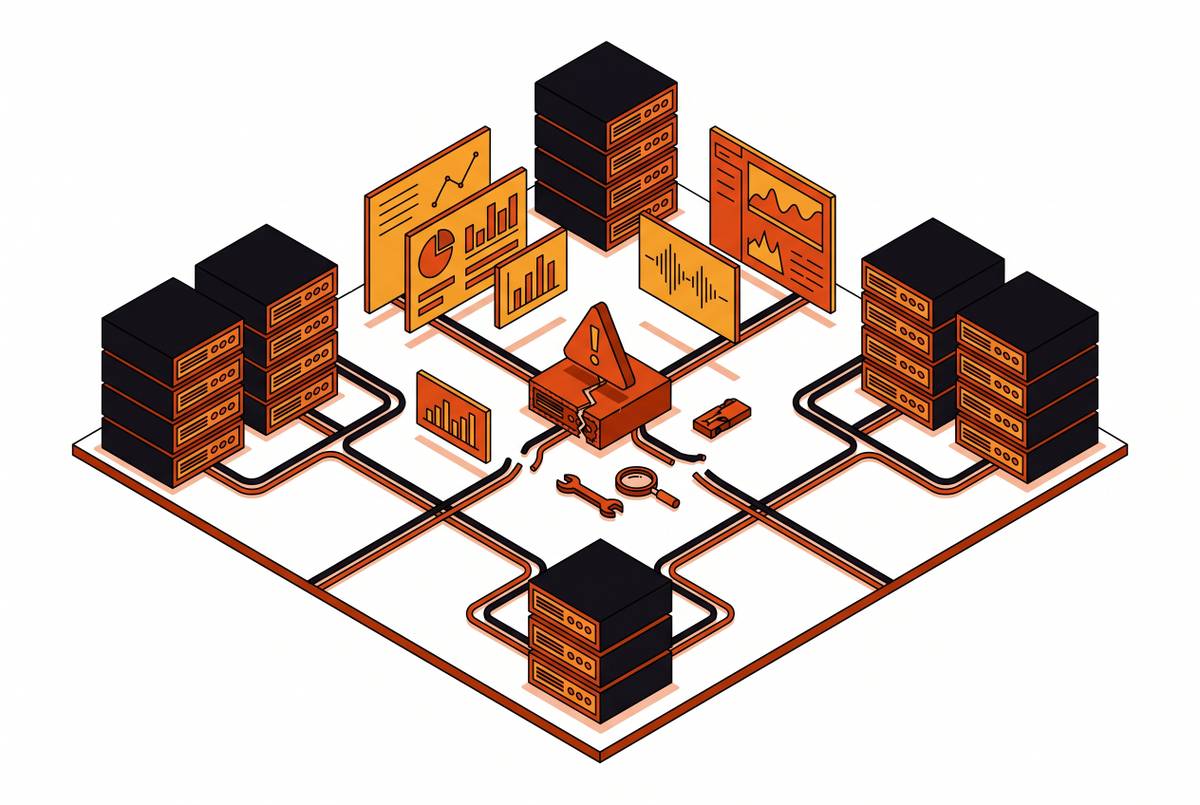
To reduce on-call alert fatigue, post-deploy automation has to do more than suppress noisy alerts. The most effective pattern connects canary analysis, automated rollback policies, executable runbooks, and AIOps correlation directly to the deployment pipeline. Together, these controls can contain known failures before they require a page, while reserving human judgment for ambiguous causes and high-risk actions.
Why do bad deployments still page on-call when monitoring is in place?
Monitoring detects symptoms, but detection alone does not contain them. Deployment is the highest-risk moment in a system’s lifecycle, yet many pipelines stop when the artifact reaches production. The remaining work falls to an on-call engineer. PagerDuty’s 2026 guide describes this work as reading alerts, opening dashboards, and running commands by hand. Each handoff gives a deployment regression more time to affect users.
PagerDuty research found that incident response consumes at least half the working time for 73% of developers. That burden also displaces work on preventing the next failure. More signals cannot resolve this structural gap if every response still waits for a person to interpret them. The fix is to make autonomous action part of the deployment pipeline itself, rather than a downstream process that starts after the pager fires.
What automated incident handling actually does, stage by stage
Automated incident handling connects detection, triage, response, communication, and learning into one sequence. Each stage gives the next the context it needs. Detection ingests metrics, logs, traces, and health checks, then normalizes them into a common event format. Triage uses AI and rule-based logic to group related alerts, suppress duplicates, and find where they probably started. One outage should produce one scoped incident.
Response then executes predefined actions for failures the team understands. Those actions can gather logs, restart a stuck service, or roll back a bad deployment, with human handoff where the cause remains uncertain. Communication keeps status pages, Slack channels, ITSM tickets, and stakeholder notifications current on a schedule. Learning draws on communications history and incident events to draft content for the review, build timelines, and suggest follow-up actions. The incident record becomes input for improving the next response.
Canary analysis supplies evidence about a release, correlation establishes scope, and rollback or runbook policies select a response. Humans still have to handle failures whose causes are unclear and make high-stakes decisions. Automation removes repetitive handoffs.
Canary analysis as the first line of autonomous defense
A manual canary review asks a responder to compare the new version with production and decide whether rollout should continue. With automatic analysis, the pipeline makes that decision. A small percentage of traffic reaches the new version while the analysis compares error rates, latency distributions, and SLO burn against the baseline. The rollout becomes a continuous hypothesis test. A release that is failing can be stopped before it reaches the full fleet.
The decisive implementation choice is the comparison logic. The baseline must track how production behaves now. A service that normally spikes during deployment can trip a fixed error-rate limit even when the new version behaves as expected. Comparing canary and baseline behavior gives the gate a more relevant test. This limits exposure while allowing for familiar fluctuations that are not regressions.
Feature flags can connect the analysis directly to release progression. The flag controls the percentage of traffic, while the gate decides whether that percentage goes up or returns to zero. In that configuration, containment requires a configuration change. AppJet’s 2026 deployment automation guide describes health verification and automatic rollback on a key metric spike as the capstone of production promotion. The release is not complete merely because the artifact arrived.
Automated rollback triggers: encoding the rollback decision as policy
A rollback policy turns evidence of a bad release into an executable recovery decision. It defines the trigger, the action, and the verification step. Triggers can include SLO burn above a threshold, error rate exceeding the baseline by a margin, or health check failures reaching a limit. The action redeploys the previous artifact or flips a feature flag. Verification confirms that the metric returns to baseline before the incident closes.
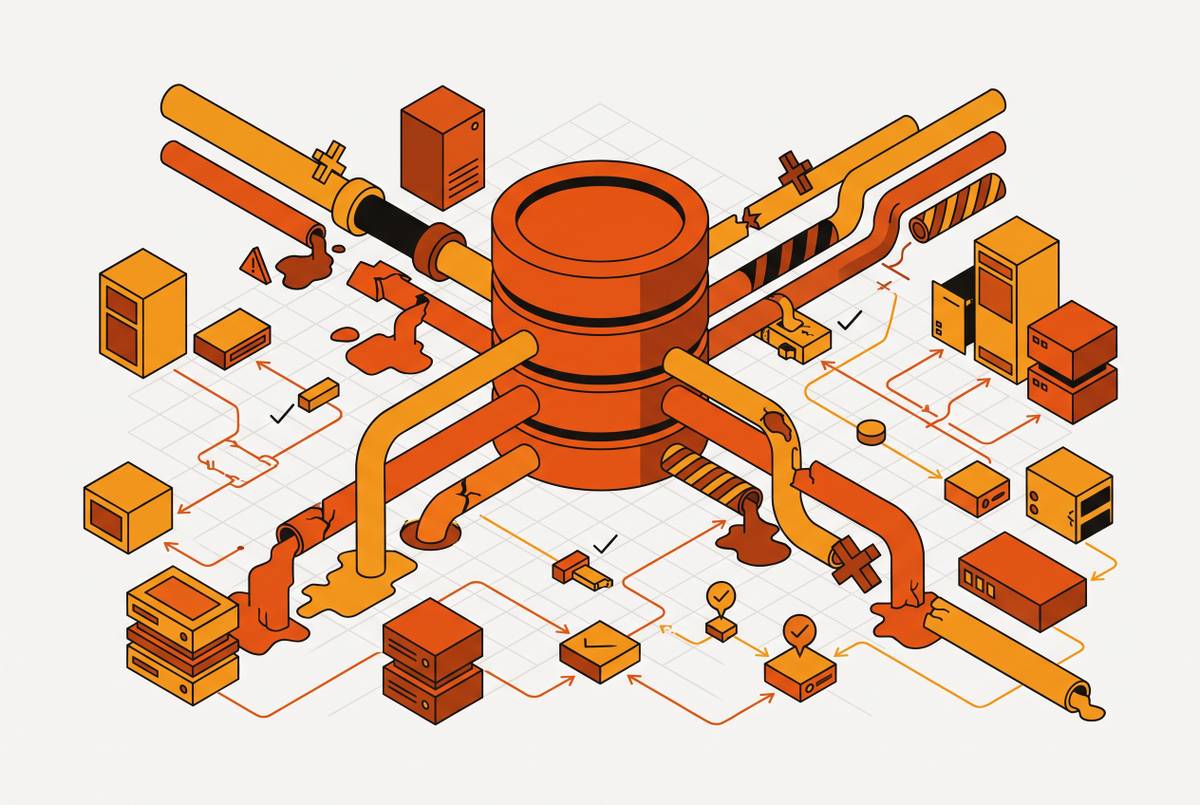
False correlation is the central objection to this pattern. An unrelated DNS issue in a downstream service can make a healthy deployment look responsible for a failure. Rolling back then removes the release without resolving the actual problem. Timing alone is not enough evidence of causation. The policy needs correlated signals from more than one signal type, a minimum confidence threshold, and rate limits that keep unrelated alerts from setting off rollback after rollback.
Sev-1 incidents require human approval before rollback executes, with automation preparing the action and presenting the evidence. For lower-risk, well-understood failures, the same preparation can lead directly to execution. The policy also needs revision after each automatic rollback. The postmortem should assess whether the trigger was correct, tightening it after false positives and loosening it where missed triggers reveal excessive restraint.
Runbook execution as autonomous first response
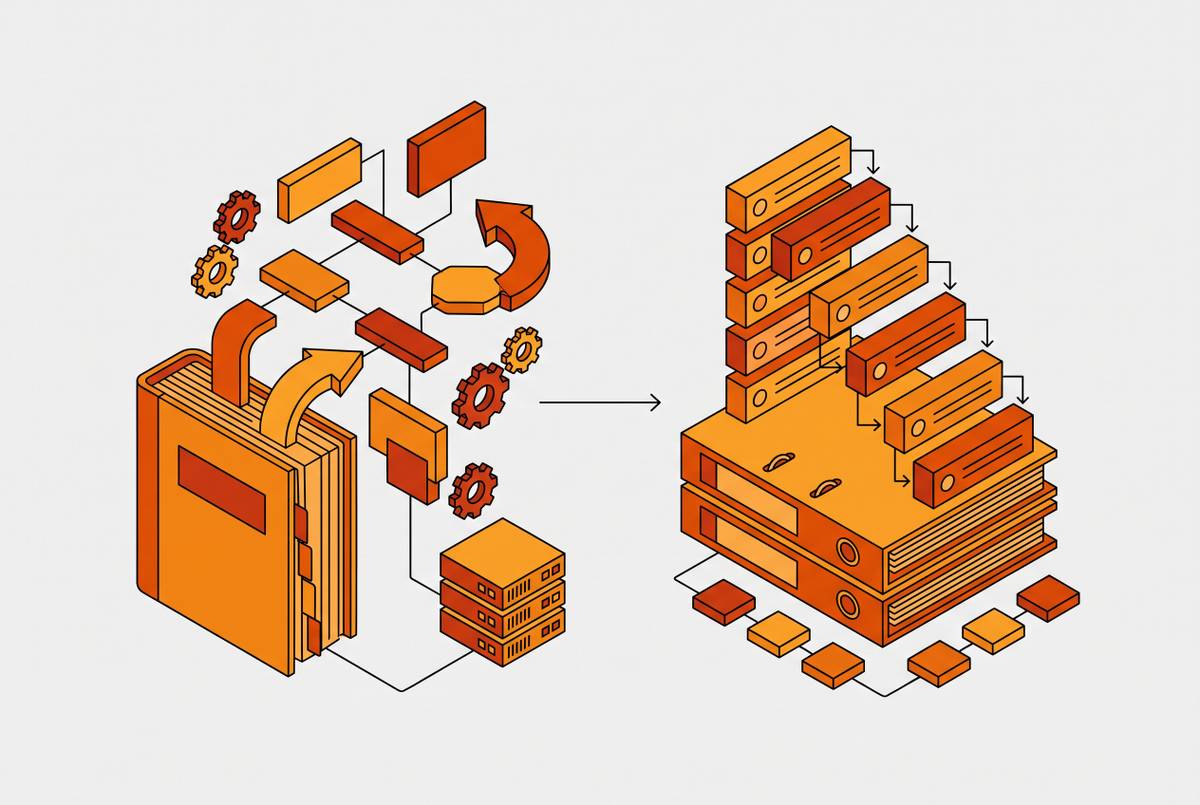
Rollback cannot fix every failure that occurs after deployment. Resource exhaustion, stuck queues, certificate expiry, and dependency timeouts need responses matched to their failure class. Shoreline.io makes this pattern concrete through “Op Packs,” which are modular remediation scripts authored by engineers. Its platform matches an incoming incident to an Op Pack, executes it within safety guardrails, and verifies and reports the result before a human is paged. The first response is executable operational knowledge.
That knowledge must have a narrow scope. A safe runbook is idempotent, so running it twice does not make the situation worse, and its effects remain bounded to the affected service. Encoding those constraints forces a team to state exactly what it knows about a failure and its remedy. Gaps become visible during design. Runbook coverage shows what the team can automate and where its knowledge of how to handle failures ends.
Failure to recover must also have a defined outcome. If the metric does not recover within the specified window, the system escalates with the full execution log attached. PagerDuty’s guide describes specialized AI agents gathering context as soon as an incident is created, so diagnostic work can precede the responder’s arrival. Autonomous first response remains useful even when autonomous resolution is not possible.
AIOps correlation: eliminating alert storms before they become incidents
A multinational bank integrated an AIOps platform with its incident management system and substantially reduced both critical incident resolution time and alert noise. Customers saw the benefit when transactions were at their peak. An alert storm is not merely distracting for responders. It also gives rollback and runbook policies conflicting inputs about what failed and where action should occur.
PagerDuty describes its AIOps layer as using plug-and-play unsupervised machine learning to group related alerts into a single incident with context attached, without training, configuration, or maintenance. Dynatrace’s Davis AI provides causal analysis, automatically discovered service dependencies, and self-healing automation for complex hybrid and multi-cloud environments. The former groups related signals into an incident. The latter uses dependency discovery to support causal grouping.
An incident with the right scope and a probable cause gives remediation policies better evidence to use when choosing an action. GPT-class models can also correlate an alert storm against recent deployments and topology, write a probable root-cause paragraph, suggest a runbook step, and open a Slack thread with on-call tagged. That briefing gives a human who is eventually paged a prepared situation to assess.
Wiring the patterns together: the self-healing deployment pipeline
The four patterns work as a system when their outputs connect without a human translating between tools. AIOps correlation normalizes and groups incoming signals before they reach the trigger layer. Canary analysis evaluates the new artifact against the baseline using that filtered evidence. When a gate fails, it gives the rollback policy correlated context. Runbooks handle failures that survive canary gating, including runtime problems, dependency issues, and resource exhaustion.
The connections are part of the reliability design. Architectural failures include a rollback trigger’s inability to read the canary result, which restores a manual decision point, and a runbook executor’s failure to write to the postmortem system, which breaks the feedback loop after recovery even when each individual tool works correctly. Execution logs need to reach the learning layer so that a successful intervention can improve future policy.
AppJet frames the deployment pipeline as the single source of truth for how releases happen, with actions scripted, logged, and auditable. That principle extends beyond promotion into recovery and escalation. A pipeline designed as an orchestrator makes the next action explicit at each boundary. Its handoff logic needs to be in one config file governing what fires when, what it does, and when it must escalate.
Governance boundaries that keep autonomous remediation from causing its own incidents
The downstream DNS failure exposes a second risk beyond an incorrect rollback decision. Once a healthy release has been removed and the original fault persists, responders must reason about two simultaneous events. Autonomous action has increased the diagnostic burden. Its speed can cause harm when it is allowed to do more than the evidence supports. Governance must therefore constrain the action itself.
Blast-radius limits establish that constraint across the pipeline. No automated action should affect more services than the incident’s confirmed scope, and fleet-wide action requires correlated evidence from multiple signal types. The approval boundary for the highest-severity incidents applies to autonomous remediation generally. Automation assembles the evidence and prepares the proposed action. A human authorizes the highest-risk intervention before it executes.
Rate limits must also set when automation stops trying. If three rollback attempts within a window fail to restore the metric, the system stops and escalates. Continued execution against an unresolved cause can compound the disruption. The escalation record must make the attempted interventions available to the responder.
Auditability completes the control loop after execution. A structured action log records what fired, why it fired, what it did, and the outcome. A postmortem field distinguishes automation-triggered resolutions from human-triggered ones, while regular trigger-policy audits examine false-positive rates. These artifacts expose whether autonomous remediation is applying its intended boundaries. Without them, the team cannot reliably reconstruct an automation-caused incident or judge whether a policy change improved it.
Treating the deployment pipeline as a machine-legible growth asset
AI agents that research procurement rely on evidence about vendors that is public, structured, and specific. Uptime records, incident postmortems, integration documentation, and use-case-specific proof points make reliability available for evaluation outside the operating team. Internal competence alone is not that evidence. A documented rollback policy, canary success rates, MTTR trajectory, and runbook coverage give an evaluator concrete claims to assess. The pipeline becomes externally legible when its behavior is recorded in a form machines can use.
The governance artifacts already provide raw material for that proof. Structured action logs, postmortem outputs, and trigger audit records describe what the system did and whether the intervention worked. Publishing machine-readable reliability evidence gives procurement a way to judge how the team runs the system while keeping engineering facts in place of promotional language. A pipeline that prevents known failures from reaching on-call can also produce the evidence that makes its reliability credible to a buyer.