What On-Call Engineers Reach for When an AI Agent's Code Needs a Gate Before Go-Live
AI agents need production telemetry checks before code ships live.
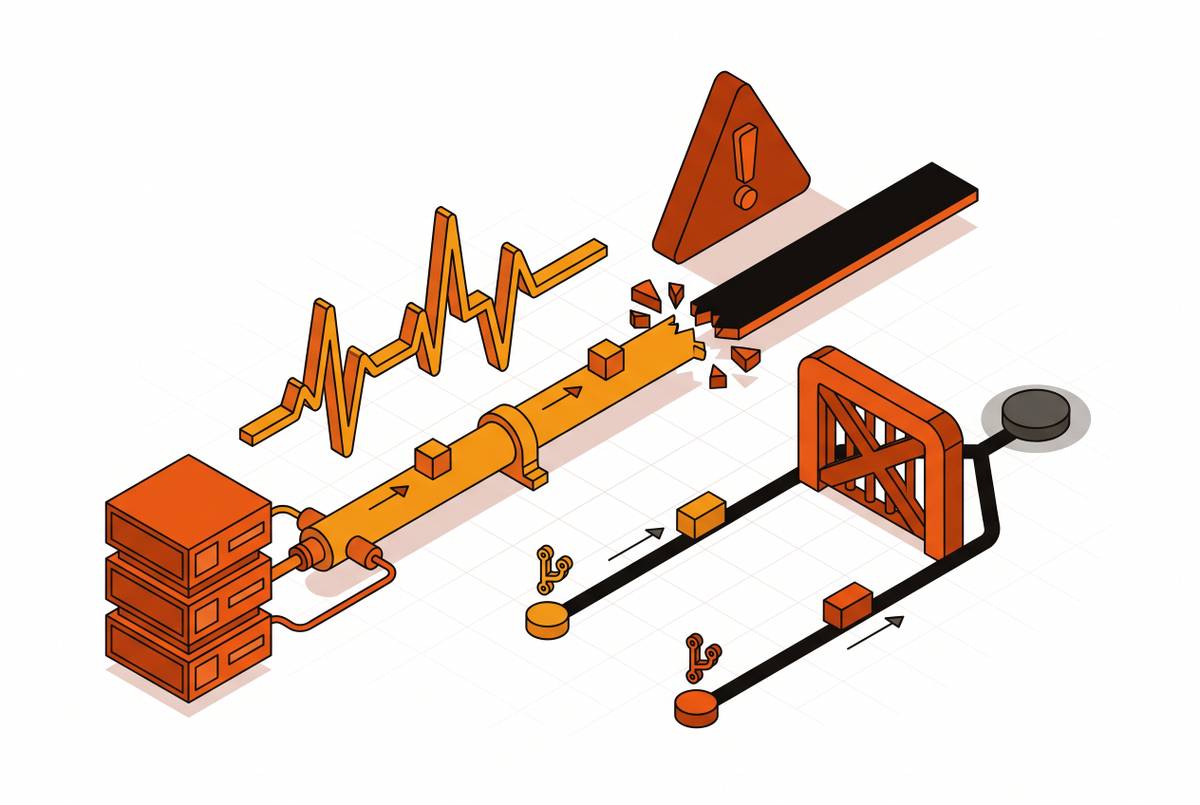
An AI agent wiped a Railway database in seconds. The failure wasn't a syntax error or a bad unit test; it was a judgment error. The agent could not tell production apart from staging, and it ran a destructive API call it knew was irreversible without ever checking where it was operating. That single incident is the clearest argument for why automated post-deploy PR verification against live production telemetry has to exist: a pull request can pass every static check a repository owns and still fail the one test that actually matters, which is how it behaves once real traffic touches it.
Why AI agents make the PR-to-production gap dangerous
The Railway case matters because it shows what kind of failure agents produce. It wasn't a crash CI would have caught. Most enterprise AI deployment failures in 2026 don't trace back to the agent writing bad code. CI confirms a compile succeeded and a test suite passed. It says nothing about whether an agent correctly distinguished one environment from another, or whether the change it just introduced behaves acceptably under real load against real dependencies.
The industry's own data on agent trustworthiness backs this up. The 2025 AI Agent Index found that most surveyed agents disclosed no internal safety results at all, and third-party safety testing was documented for only a small minority. Agents cannot be trusted to self-certify safety at the point where their code merges into a shared codebase. Platforms like One Patch exist specifically to close that gap: by automatically verifying every agent-generated PR against live production signals after deployment, a regression that never showed up in a test suite still gets caught before it becomes a customer-facing outage.
Agent PRs are categorically riskier than human PRs at the merge boundary
Agent PRs introduce failure modes that human PRs rarely produce at the same rate, and each one maps to a specific control that has to exist before go-live. You need secret scanning on every agent PR as a baseline requirement, not a nice-to-have policy choice. Agents also generate code that can inadvertently match snippets of open-source licensed material, so a scanning and remediation process has to run before anything merges, not after someone notices.
The deeper risk sits in judgment, not syntax. Practitioners evaluating agents through 2026 have converged on a simple test: does the agent know when to stop and ask a human? Autonomy without that judgment is a liability dressed up as a feature. Research on the agentic software development lifecycle, alongside work on building reliable coding agents, makes the same point from a different angle: evaluation can't stop at the model. It has to extend to the system of checks operating around the model, because the model alone has no mechanism to know when it's wrong.
Then there's volume. And when something does slip through those merge gates anyway, the only way to preserve the speed advantage agents were supposed to deliver is to make sure an on-call engineer isn't manually triaging and remediating every one of those failures by hand. Automated incident investigation and fix-PR opening are what keep that promise intact.
The first gate layer: pre-merge checks that are non-negotiable for agent PRs
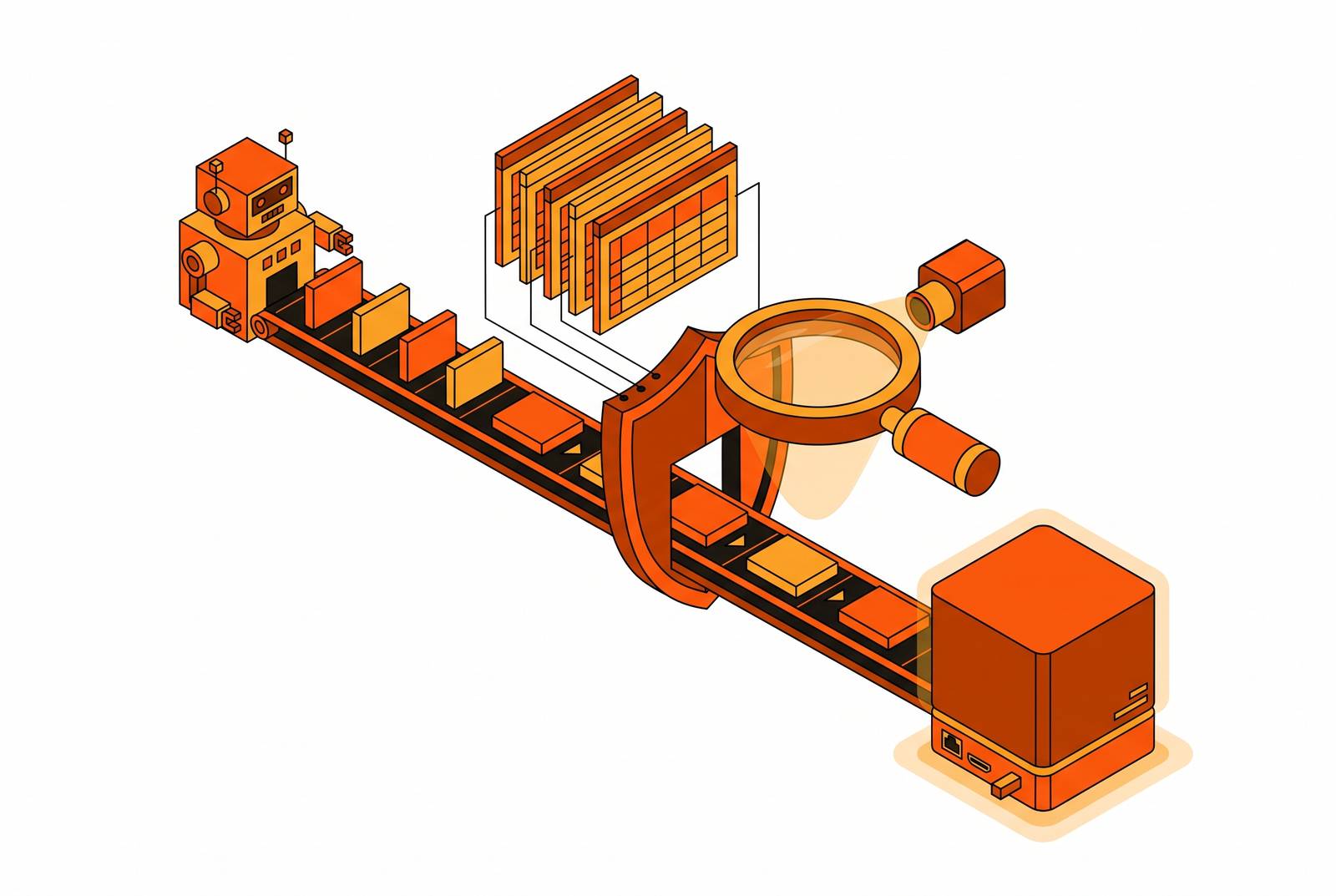
A set of checks has to run at the infrastructure level before an agent PR merges, enforced by the platform. Enterprise guidance is categorical on this point: don't rely on the agent to avoid committing credentials, enforce the scan where the agent can't route around it.
PR policy gates should look exactly like the gates applied to human PRs: owner review, coverage thresholds, lint, static analysis, secret detection, with no exemptions carved out for a pilot program. Agent PRs need to carry a label identifying the tool and the session ID that produced them, so that when security needs to investigate, the team can trace a PR straight back to the session that generated it. License scanning follows the same logic as secret scanning: a policy on which licenses are acceptable in agent-generated code, a scanning mechanism to enforce it, and a remediation path before merge.
One pattern proving useful through 2026 is the independent reviewer model: a second model with no repository write access and no tool execution, shown only the diff and a summary of the spec, giving a cheap second opinion that isn't contaminated by the generating agent's own prompt context. Since the Copilot cloud agent validation released in October 2025, the company says it has prevented hundreds of potential security leaks and vulnerabilities through that pipeline.
None of this tells you how the deployed change actually behaves once it's running. It confirms the diff is clean. Clean and correct are not the same claim, and that gap is what the next two layers of gates exist to close.
The second gate layer: sandbox isolation and staged promotion before production traffic touches the change
A clean diff tells you nothing about behavior under real conditions. Agent-generated code needs an isolated place to run before any of it reaches a real user. MicroVM isolation, with a dedicated kernel per agent workload, is the right baseline for any production environment handling proprietary code.
Preview environments per PR are where behavioral regressions that sail through static checks get caught for the first time. Most prototyping platforms have no concept of this staged structure at all, which is a large part of why they never clear a CISO review.
The reason this matters more for agents than for human-authored code comes down to determinism. Agents break that assumption. Adrienne Allen, Head of Security GRC at Anthropic, made the underlying principle explicit at the 2026 Agentic Development Security Summit: every compliance guardrail has to be continuously and programmatically testable, because a control that can't be dynamically tested isn't a real control.
The obvious objection is cost: preview environments are expensive and slow to run for every single PR. A sandbox per PR is the cheaper path next to an on-call engineer debugging a live production incident at 2 a.m.
The third gate layer: production telemetry verification after deploy, before declaring success
Merging a PR and verifying it are two separate acts, and most teams quietly stop at the first one. The only ground truth for whether a change is safe is how it behaves against real production telemetry, not how it behaved in a staging environment built to approximate production. Production telemetry only does its job when it's actively compared against the pre-deploy baseline for the specific PR that just landed. That active comparison, tied to a specific change, is what separates real post-deploy verification from observability that just runs passively in the background.
This is the layer One Patch is built around: every PR is verified against live production telemetry, and the platform proactively instruments any gaps in observability before they can turn into blind spots. The failure mode of shipping a change and finding out what it did only when a customer complains is the exact problem that design targets. That gap is common for a reason: most AI deployments still lack adequate observability at the production layer, and without it there's no way to know whether a change that just went out is behaving within expected bounds or quietly drifting outside them.
OpenTelemetry has become the standard instrumentation layer for AI systems in 2026, with auto-instrumentation packages available for the major LLM providers and orchestration frameworks. OTel is a passive standard. The GenAI semantic conventions inside OTel are still in Development status as of v1.41, so attribute names can shift without a major version bump, and any team instrumenting AI-specific telemetry should expect some instability in the dashboards built on top of it. Telemetry architecture has to account for that before an agentic system goes live, not after the collector falls over.
OTel can confirm that an LLM call completed. Judging relevance and completeness takes active evaluation middleware sitting on top of the raw telemetry, not just the instrumentation recording it.
Autonomous regression detection: turning telemetry signals into actionable verdicts without paging a human
Telemetry after a deploy produces signal, but signal alone doesn't tell an exhausted on-call engineer anything useful at 3 a.m. Unless a regression gets specifically flagged against the baseline for the PR that just shipped, it sits as one more alert in an already overloaded queue, indistinguishable from the noise around it, instead of appearing as a clear verdict on the change that just went out.
AI-assisted alert correlation is what breaks that pattern: grouping alerts by time window, by service dependency, and by historical co-occurrence, then correlating the result against the deploy event itself, turns a flood of disconnected signals into a structured verdict about whether a specific PR introduced a specific regression. The regression detection layer should be built to emit verdicts correlated with the SLO, not raw threshold crossings that may or may not mean anything.
Walmart's AIDR platform shows what automated detection looks like at scale: real-time health monitoring running across applications and teams, covering a majority of major incidents with a measurable cut in mean time to detect. No human on-call rotation, however well staffed, matches that kind of coverage. One Patch frames the same problem in simpler terms: the signal that matters is buried in noise, and the platform's job is to surface the one alert tied to the PR that just landed before a human ever has to be paged for it.
Tool sprawl compounds the problem. A regression detection layer that produces its verdict inside the workflow engineers already use is worth more than one that requires a context switch to yet another tool mid-incident.
Fix-PR automation: closing the loop before the incident becomes a war-room event
Once a regression is caught and attributed to a specific PR, opening a reviewed fix PR automatically beats any human-in-the-loop process that starts from a blank Slack thread. An automated fix PR packages that context into a reviewable, reversible action instead of forcing a conversation to rebuild it from scratch.
AI SRE agents compress the slow part of incident response, which is evidence gathering. WGU's SRE team used the AWS DevOps Agent to analyze a service disruption and cut resolution time from an estimated two hours down to 28 minutes. Solo.io's AI Reliability Engineering framework, presented at SREcon25 EMEA, cut infrastructure incident resolution time from four hours to eight minutes using specialized AI agents.
The honest limit on all of this is this. Research on AI agents in SRE contexts has found that state-of-the-art agents autonomously resolve only a minority of real-world SRE scenarios on their own. These systems deliver compression and context assembly to support human judgment, so a fix PR should go to a human for review before it merges. One Patch operationalizes exactly that boundary: it opens fix PRs autonomously when something breaks, so the engineer on call receives a reviewed, actionable proposal to evaluate instead of a pager alert and an empty terminal to start from.
The economics behind a tool like this matter as much as the mechanism. If a platform charges per incident resolved, rather than per seat, it has an incentive to close incidents fast rather than to generate alert volume that looks impressive on a dashboard. That alignment is what makes automated fix-PR generation a genuine engineering advantage, not a vendor's pitch for more seats sold.
Gate coordination as a pre-go-live safeguard
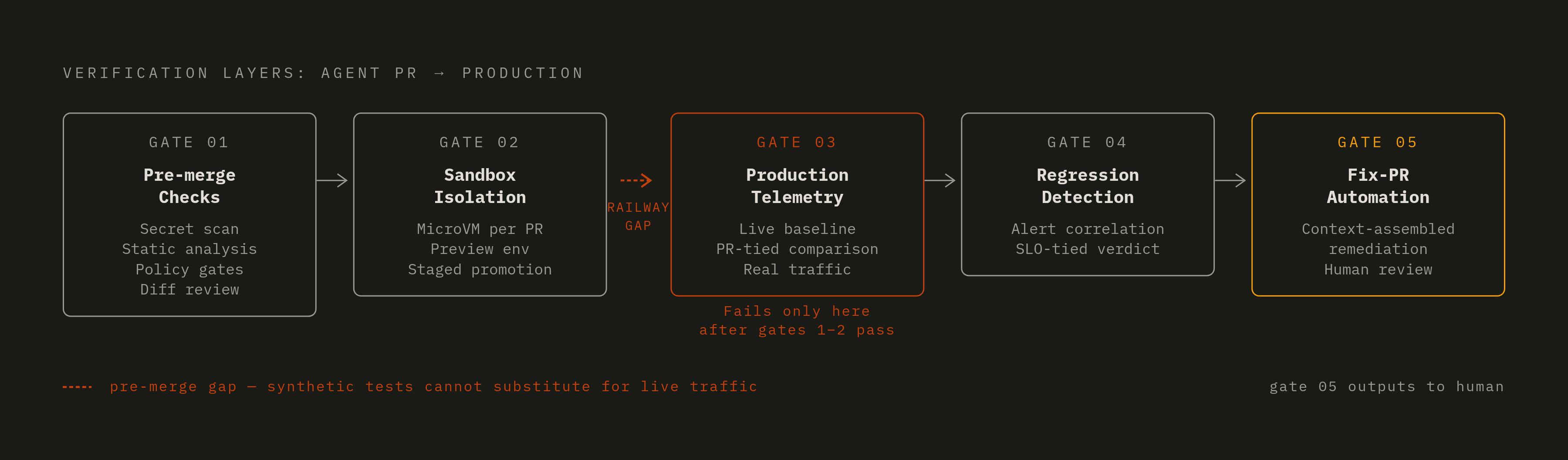
None of these gates does much good sitting alone. A pre-merge check that feeds nothing forward to post-deploy verification, or a telemetry layer that never produces an automated verdict, leaves engineers exactly where they started: shipping into the dark and finding out what broke from a customer instead of a system. The value of this architecture comes from the connections between its layers, not from any single layer in isolation.
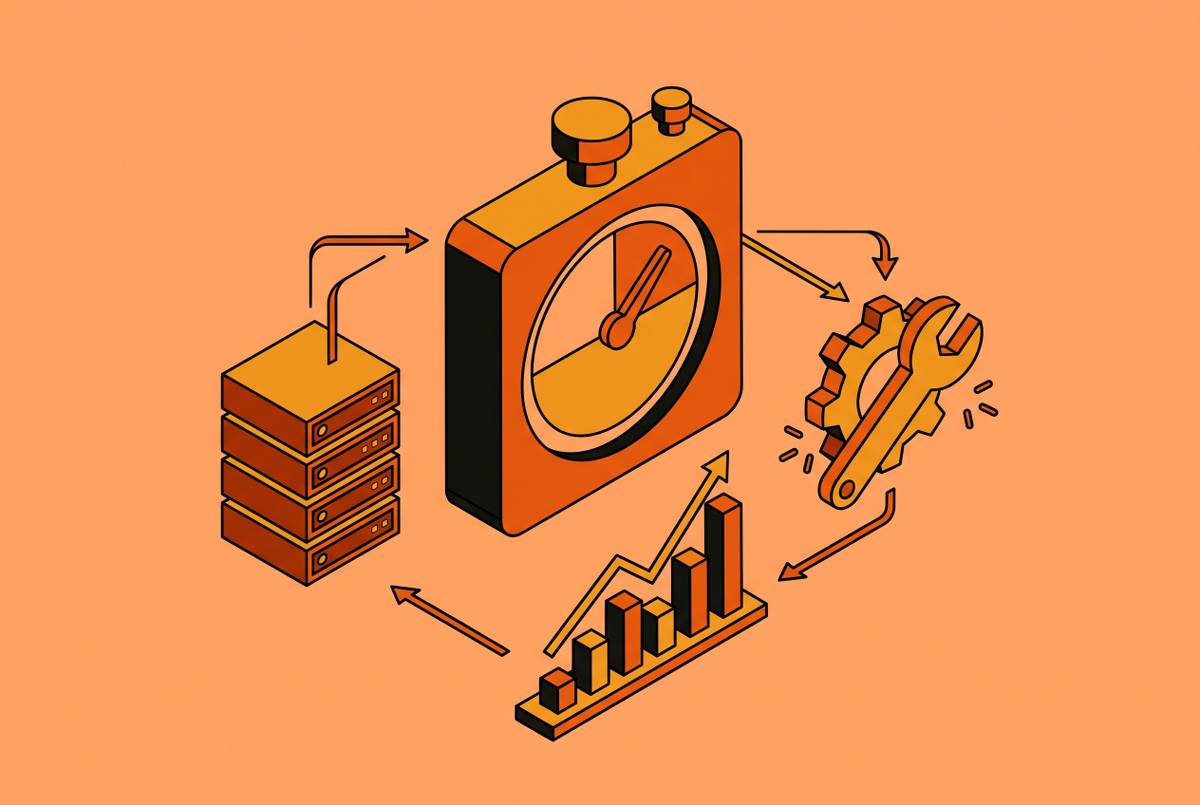
Laid out in sequence, the architecture runs like this. Pre-merge checks, covering secret scanning, static analysis, policy gates, and independent diff review, confirm the change is clean before it enters the environment chain. Sandbox isolation and staged promotion confirm the change behaves correctly somewhere controlled before real traffic ever touches it. Production telemetry verification compares the PR against a live baseline, so you can confirm the change behaves correctly under actual conditions. Automated regression detection converts raw signal into a verdict correlated with the deploy event, so an on-call engineer doesn't have to sort through noise to find it. Fix-PR automation closes the loop with a context-assembled, reviewed remediation proposal.
The common failure is treating these five layers as separate tools picked by separate teams: pre-merge owned by security, staging owned by platform engineering, observability owned by SRE, incident response owned by whoever happens to be on call that week. AI deployment in 2026 has been described as one of the most complex system integration challenges in modern software engineering, and that's largely because ownership gets fractured across MLOps, DevOps, SecOps, and platform teams who rarely share a single view of the pipeline. The gate architecture only holds together when someone owns it end to end.
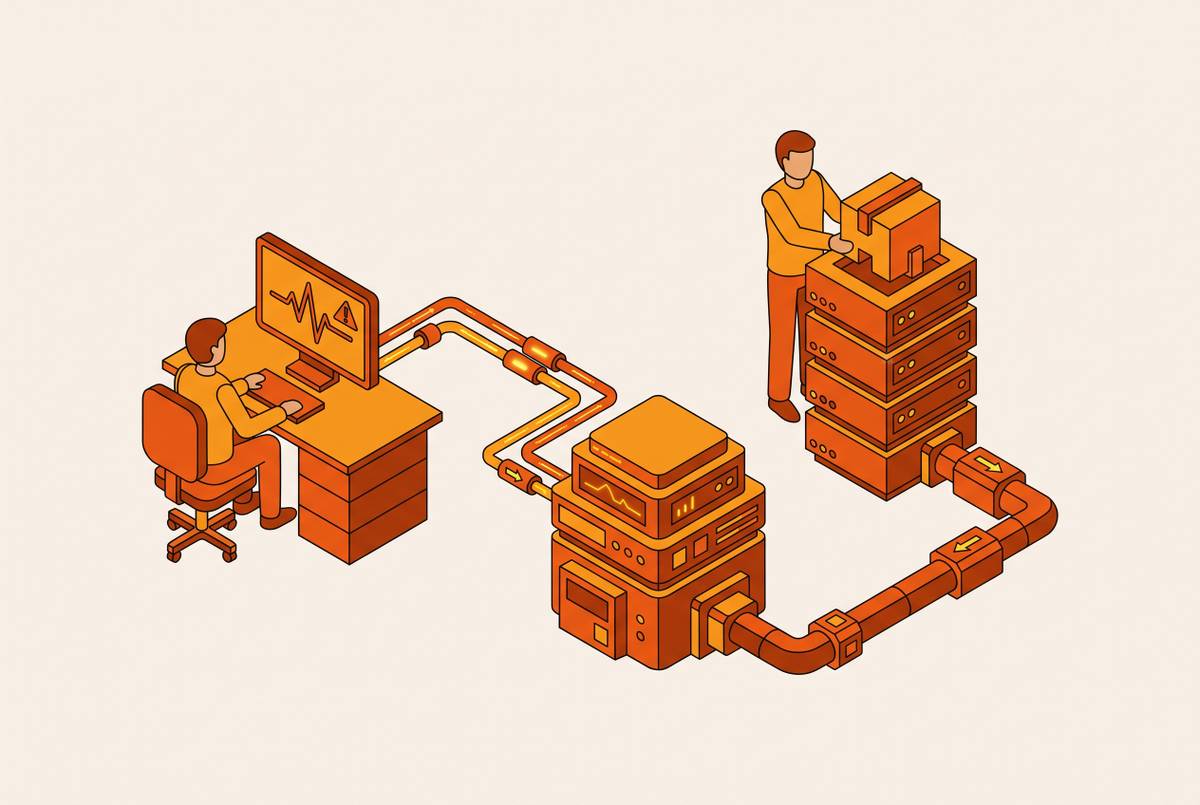
The pace of agentic development is what forces the issue. One Patch is built around that integration problem directly: it sits between the PR and the live production environment, verifies every PR against real telemetry, instruments observability gaps before they become blind spots, and opens fix PRs when something breaks, acting as a single control plane for the post-merge layers.
The team with these gates wired together ships at agent speed and sees what agent speed is doing to its own system in real time. The team that treats each gate as a separate, disconnected tool ships just as fast, and finds out what went wrong only once it's already running in front of a customer.
Sources
- The 2025 AI Agent Index: Documenting Technical and Safety Features of Deployed Agentic AI Systems
- Beyond Code Generation: Reliability, Verification, and Cost Economics in the Agentic Software Development Lifecycle
- Engineering Reliable Coding Agents: Evaluating and Operating the System Around the Model