Runbooks That Tell You When to Roll Back and When to Patch
Rollback restores service but can reopen a CVE, so name who decides.
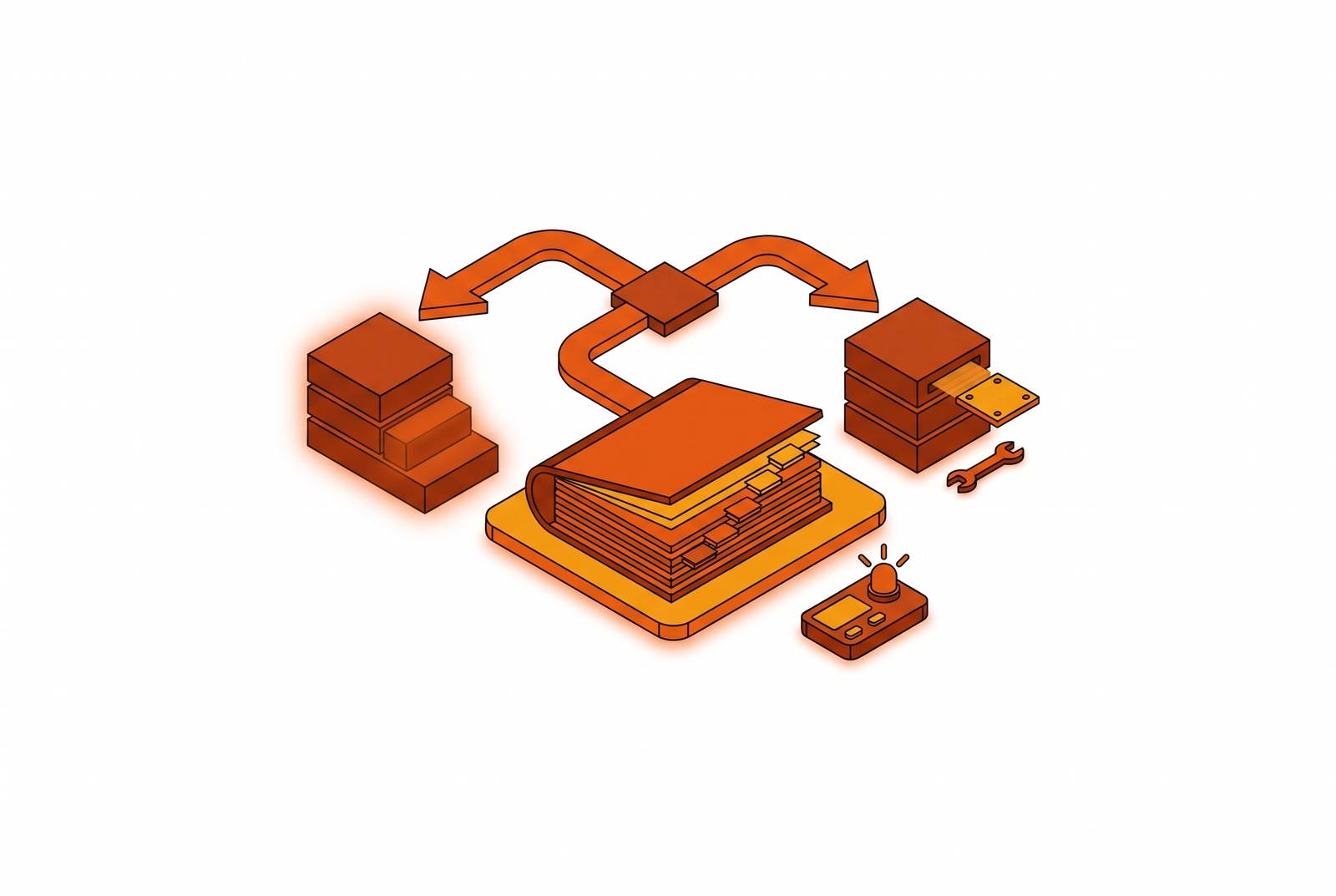
Automated fix PR generation on production regression suits changes that can be reversed but take time to verify, with a canary window and smoke tests before the rollout goes ahead. It does not replace authorization to reopen a security vulnerability. A rollback/patch runbook must encode that decision separately, naming the evidence required, the owner who accepts exposure, and the conditions that end the exception.
Why the September 2026 RDS failure is a decision problem, not a patching problem
After the September 2026 Microsoft cumulative updates, affected Remote Desktop Services sessions could not disconnect cleanly, and new connection attempts hung. Removing the update could restore service, but also remove a critical security fix. Recovery and remediation were now in conflict. An engineer following restoration steps needed a decision rule that those steps alone could not provide.
The same cumulative cycle addressed CVE-2026-69525, a CVSS 9.8 unauthenticated remote code execution vulnerability affecting Windows Server versions 2012 through 2025. Rolling back an affected build reopened that exposure. Microsoft documented a Known Issue Rollback, or KIR, deployed through Group Policy as a workaround rather than recommending removal of the cumulative update. The permanent fixes followed on September 14 in KB5129235, KB5129237, and KB5129238.
Finding the workaround was part of the decision. Microsoft documented how to find KIR through public Windows release health and update-history channels, including KB Known Issues sections, as well as the M365 admin center. The package was not exclusively tenant-gated, but administrators using different channels could encounter different information. A sound decision therefore needed both someone with security authority and up-to-date evidence about ways to recover.
What a rollback actually is, and what it is not, in a security context
A rollback is a controlled restoration to a previous validated state. A forward fix, including a hotfix, corrects the problem without restoring that earlier state, while a workaround addresses the operational symptom without necessarily removing its cause. These are not interchangeable paths to recovery. In the security case, reverting a patch removes the protection supplied by that patch.
Three states define the trade-off. A patched system has the remediation but may suffer degraded availability, and a failed system can remain remediated while unavailable. A rolled-back system restores availability but leaves the CVE unremediated. Security rollback must therefore be time-bounded at authorization, auditable through recorded actions, and safety-first, favoring consistent state over feature availability.
Why most runbooks have no logic at the decision fork
Mechanical instructions answer how to reverse a change. Whether restoring service justifies reopening a vulnerability calls for a decision on how to respond within a document usually written to guide someone through a task. Even a runbook with validation, rollback, and escalation sections can leave this choice unspecified.
The gap grows as incident conditions change. Static instructions fix the target, preconditions, and definition of success when the document is written. They cannot supply the current exploitation status of a CVE or establish whether a newly available workaround preserves the patch. The document can, however, require those facts to be collected before authorization.
An outdated command can be fixed during an incident, but if no risk owner is named, nobody is accountable for the exposure window. Service returns, the incident ends, and the rollback becomes normal operation. The underlying failure is an exception that nobody formally owns.
The four components a runbook must contain to make the decision explicit
The first component is a pre-designated security risk-acceptance owner. This authority must be named before an incident rather than inherited by whoever receives the first page. In the RDS case, that owner would decide whether reopening CVE-2026-69525 was acceptable given the available evidence. Technical permission to uninstall KB5122871 would not itself confer authority to accept unauthenticated remote code execution exposure.
The second component is a separate availability incident commander. The handoff must have an explicit condition. For RDS, it occurred when restoration work moved from identifying ways to recover sessions to considering removal of the security fix. The commander was responsible for bringing service back, while the security authority had to decide whether to accept the resulting re-exposure.
The third component is an embedded evidence checklist covering the CVEs reopened, their CVSS scores and affected build ranges, current exploitation status, and non-rollback alternatives. Evidence must describe conditions at decision time. For KB5122871, the record would identify the CVSS 9.8 vulnerability and examine the available restart workaround and Group Policy KIR. It would also distinguish the temporary restart measure from a durable recovery path, without treating the M365 admin center as the only discovery channel.
The fourth component is a time-boxed exception with a predefined reassessment trigger. Authorization must record a hard expiration for the exposure window. A patched build, a KIR publication, or changed exploitation telemetry must trigger reassessment. In the RDS case, the September 14 out-of-band release supplied a concrete event against which the open exception could be reviewed.
How to classify changes by reversibility so the runbook applies the right path automatically
Reversibility speed is the governing criterion for routing changes. The relevant questions are how the team would know a fix was wrong and how quickly it could undo the change. Labels alone do not answer those questions. Classifying the change before deployment avoids leaving that assessment to an engineer handling an outage.
A reversible change with fast verification is a candidate for direct application with automated health checks. A reversible but slow-to-verify change belongs in a pull request, with a canary window and smoke tests before the next batch proceeds. A change that is not cleanly reversible requires escalation to the named security risk-acceptance owner before application.
Patch orchestration can implement this classification through guarded stages. After reboot, failed health probes stop progression and trigger escalation. Healthy canary observations and smoke tests allow the next batch to proceed, while failures route the workflow toward rollback and its evidence checklist. That routing does not waive security authorization. A patched build containing a schema migration also needs a separate migration rollback specification, because reversing a migration can be complex and partial.
Can an AI tool just open a PR instead, and who owns the rollback?
AI-driven runbook agents improve the mechanical layer of remediation. An agent can resolve the owning controller at runtime, read current resource limits from the live Pod, test whether a fix applies, and re-check the workload afterward. Those capabilities let the agent use what it sees now in place of assumptions in static instructions. They do not confer authority to accept security exposure.
For recurring regressions with an apparent fix, a pull request provides the appropriate route when the change is reversible but needs time to verify. Diagnosis and authorization remain separate decisions. The review criteria are whether the proposed change is applicable, whether health checks and a canary can establish success, and whether reversal would remove a security control. Automated PR creation delivers the candidate fix, with deployment decisions still required.
The governance gap becomes sharper when an agent saves its own operational notes. A choice made at runtime can become the new baseline without anyone approving its security consequences. The remedy is an output gate. The agent can populate the evidence checklist from live telemetry, but a named human must authorize security rollback and its bounded exception. Runbook updates made by an agent also need approval before they can be used as instructions.
What closes out a rollback exception, and why most teams never formally close one
A rollback exception needs an exit condition as precise as its entry condition. Three valid outcomes can dispose of the current exception. A fixed build supersedes the failing patch, a verified compensating control covers the reopened CVE’s attack surface, or the named owner formally re-accepts exposure for another bounded window when reassessment occurs. Re-acceptance ends the previous authorization period while the underlying vulnerability remains.
Microsoft listed the RDS issue as “Mitigated” while the permanent fix had not yet shipped. That label did not establish that a rolled-back host had regained the missing security protection. The runbook’s dated version history must instead record the patched build applied, the compensating control verified, or the renewed authorization.
Teams often omit closure because they never opened an exception. They treated rollback as a temporary workaround and declared success when RDS returned, leaving the security half of the incident unassigned. For an administrator who removed KB5122871, the runbook should have required application of KB5129235 within a defined window after release. Microsoft’s September 14 out-of-band builds resolved the case, but the operational test is whether their arrival triggered reassessment automatically or depended on a chance visit to release health.
Applying the same decision logic to marketing infrastructure and site legibility
A misconfigured enrichment pipeline, an agent writing to a production data store, or a structural site change can create a regression that requires rollback or forward repair. Each needs an owner named in advance, an evidence checklist, and an exception with a time limit.
With agent-driven growth infrastructure, a rollback decision can affect more systems. Clay aggregates data through a workflow canvas, Claygent gathers company information and personalizes outreach through waterfall enrichment, and Clay MCP pushes prospecting data into representatives’ AI tools. Enrichment errors can propagate before review. The Model Context Protocol gives agents a standard way to discover tools and context across systems, so a rollback in one tool can affect state elsewhere.
A structural change that reduces machine-readability may not generate an alert comparable to an RDS failure. The response still requires identifying the change, assessing whether reversal or forward repair restores the legibility signal, assigning ownership, and bounding the exception. AI shopping agents only transact with sites they can reliably parse. A regression can therefore make a site harder to find and stop a transaction from going through.
Building the runbook specification for the decision fork
The specification begins with a security context block. This section records the CVEs addressed by the change, their CVSS scores, affected build ranges, and exploitation status at authoring time. It must clearly require fresh exploitation evidence when the decision is made.
The workaround surface records ways to fix the operational symptom without rollback while keeping the security fix in place. These include vendor-documented workarounds, KIR packages, and compensating controls where available. Discovery channels belong in this section too. Their access requirements make information gaps visible before an incident, rather than leaving an administrator to assume that an inaccessible channel contains the only answer.
The named-owners section specifies the security risk-acceptance role and a backup, with the availability incident commander named separately. Its handoff condition is the shift from restoring service to accepting re-exposure. The authorization record then captures who approved rollback, when approval occurred, which evidence checklist was reviewed, and what the approval covers. That dated record formally opens the exception.
The exposure-window section assigns a hard expiration at authorization. The window belongs in a calendar entry. The reassessment section defines a fixed-build release, KIR publication, or exploitation change as a trigger, with automatic monitoring where possible and a named person’s standing responsibility otherwise. Expiration and reassessment serve different purposes, so neither substitutes for the other.
The closure section states the acceptable outcome and requires a dated version-history entry documenting it. Updates made by an agent must pass the same human approval gate before they become the operational baseline.