Integration Testing Limitations in Microservice Architectures
Tests can't catch what only happens when dozens of services drift in production.
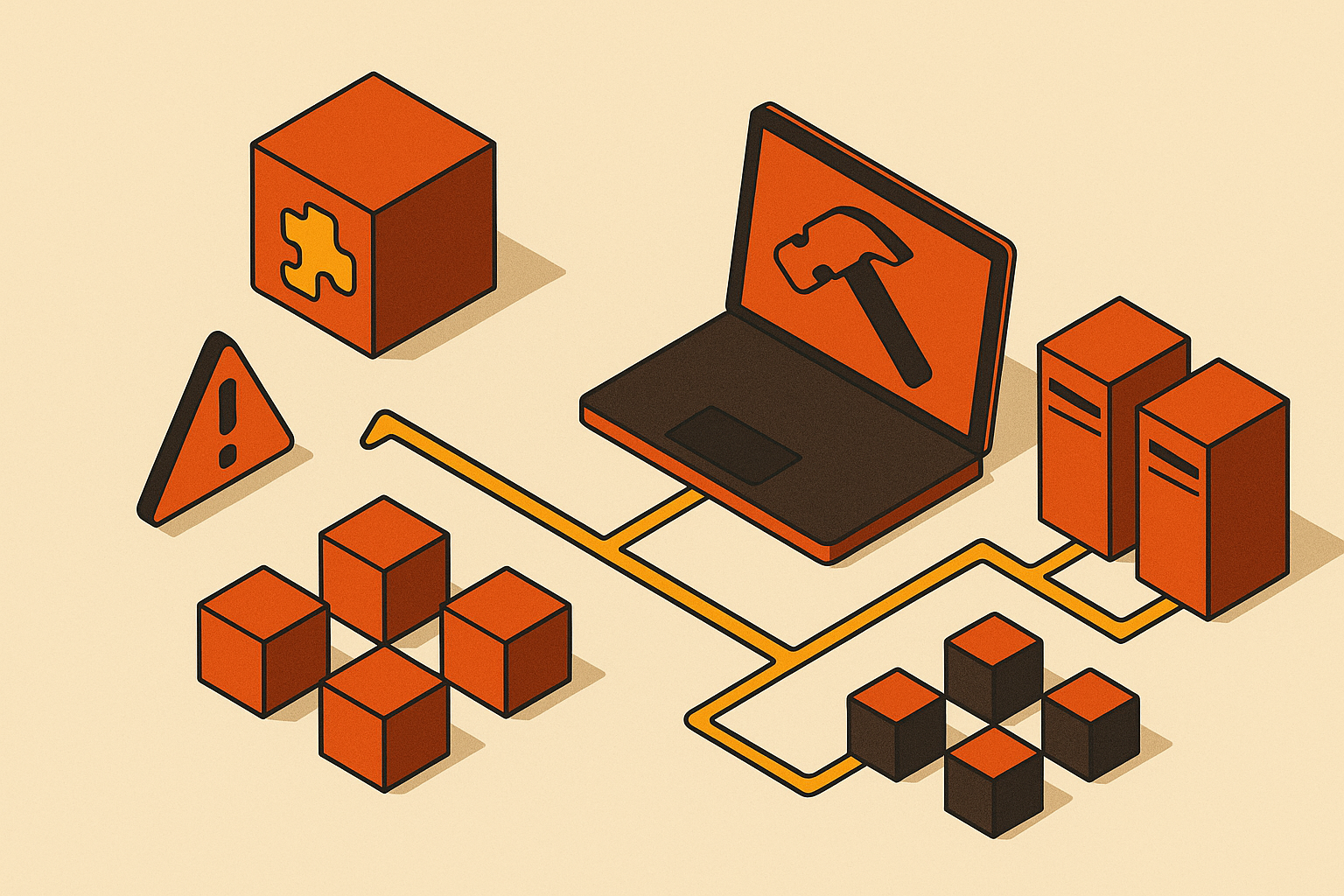
Microservice architectures were supposed to fix testing. Instead they moved the hard problem somewhere integration tests can't follow: the gap between what a test simulates and what production actually does under real load, real data, and dependency drift nobody scheduled for.
Here's the trade microservices makes. Each service gets its own data store, its own deploy schedule, its own network boundary. That autonomy is the point, and it's also the tax nobody itemizes up front. A monolith's integration suite covers one process boundary, a binary talking to itself. A microservice suite has to cover dozens of independently evolving services, shipped by different teams on different cadences, each one capable of breaking a contract nobody remembered to re-check. Add a service and the interaction paths multiply, because the dependency graph never sits still. Services get added, deprecated, versioned, re-versioned, and the graph you tested last sprint isn't the graph running this afternoon.
Writing more tests won't close that gap. The mismatch is structural: integration tests model a fixed set of assumptions about how services behave, and production is where those assumptions expire on a schedule nobody controls.
How mocks drift from the services they are supposed to represent
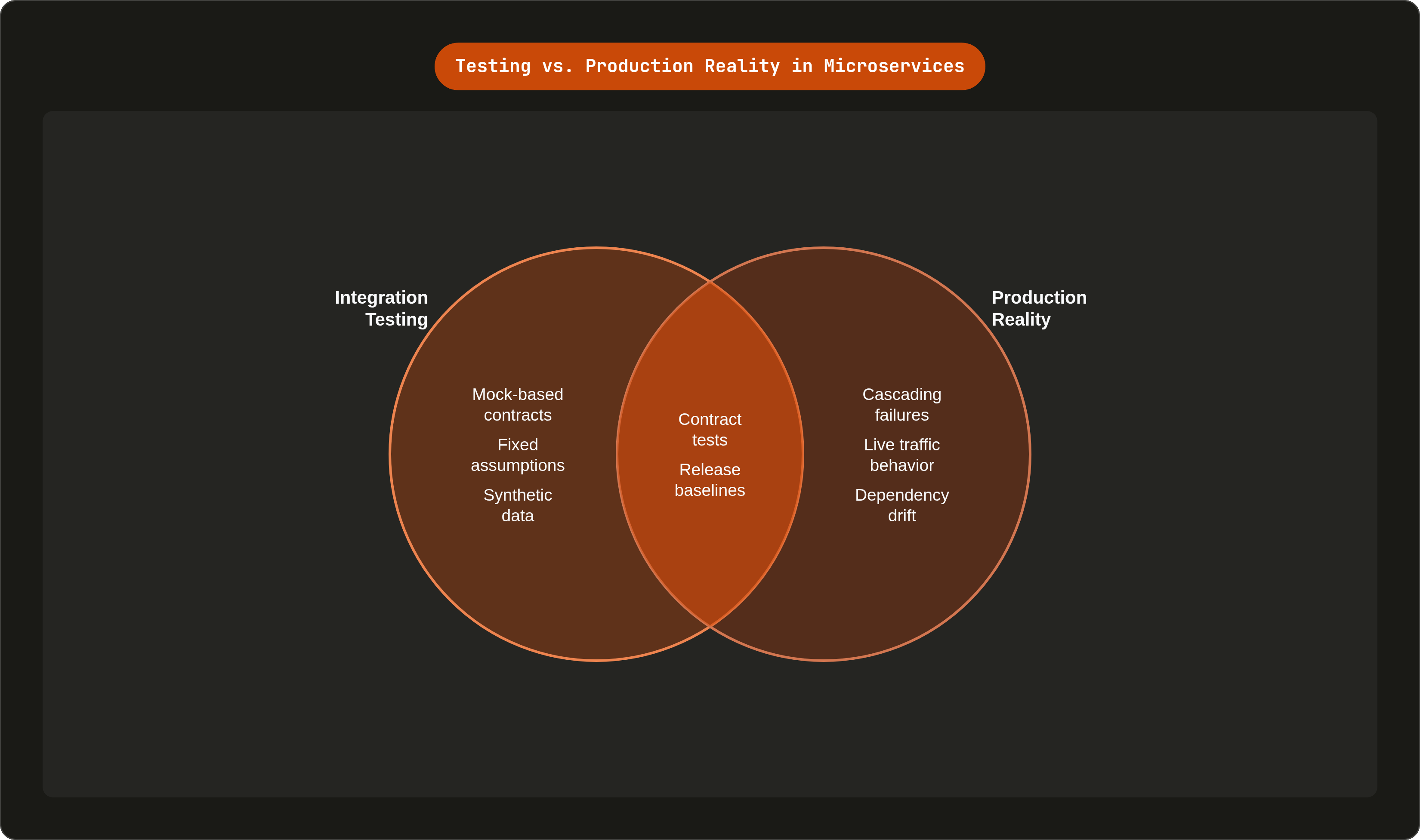
A mock is a snapshot, frozen at the moment someone wrote it against what a downstream service returned then. It stays frozen there while the real service keeps shipping changes underneath it. A new required field, a changed error code, a shift in response timing under load, none of that breaks the mock. It just keeps answering the way it always has, confidently, while the actual service has moved on without telling anyone.
Teams usually find out about the gap in production, when a caller gets a response shape it was never built to handle. It's a common failure pattern: the mock keeps answering correctly for a schema that no longer exists.
Consumer-driven contract testing, the kind Pact popularized, is the standard fix. It turns what the consumer expects into a machine-checkable contract the provider has to satisfy before shipping. That's a real improvement over hand-rolled mocks, but it carries its own cost, and the cost is cross-team coordination that has to hold as headcount and service count both climb. Contracts need an owner, and they need updating every time the data model shifts. If the data model is shifting constantly, the contracts get brittle fast and turn into one more thing somebody has to maintain rather than insurance you can forget about. What's left, often, is a suite that stays green while the thing it's supposed to verify has quietly changed underneath it.
Why staging environments cannot replicate production
Staging is a compromise, best called that instead of dressed up as a smaller production. It runs a fraction of the services, on cheaper hardware, with synthetic data, at a sliver of real traffic volume. Every one of those shortcuts is defensible on its own; stacked together, they guarantee staging can't tell you what production is going to do.
Volume matters more than most teams admit out loud. Bugs that only surface under high cardinality, or with an unusually large payload, or with a particular skew in the data distribution, simply don't exist in a dataset built on purpose to be small and clean. Dependency versions drift too: staging often runs pinned or older builds of third-party services, while production gets upgraded on whatever schedule the vendor picks, not yours. Configuration diverges in ways nobody tracks on purpose, environment variables, feature flags, secrets rotation, network topology. Each gap is small by itself. They pile up quietly, and eventually staging and production disagree on enough small things that they're two different systems sharing a name.
Eventual consistency failures are the hardest of these to reproduce on purpose. Each service owns its own database, so propagation delays between services open windows of temporary inconsistency that depend on the exact state and exact traffic pattern at that moment. It happens or it doesn't, and staging rarely generates the conditions for it to happen at all.
There's a cost dimension too, and it isn't small. Keeping a high-fidelity staging environment in sync with production gets more expensive and more of a headache as service count and team count grow, and that cost compounds the longer a team avoids reckoning with it. No staging environment, however carefully maintained, runs actual user behavior.
The failure modes that only appear in live traffic
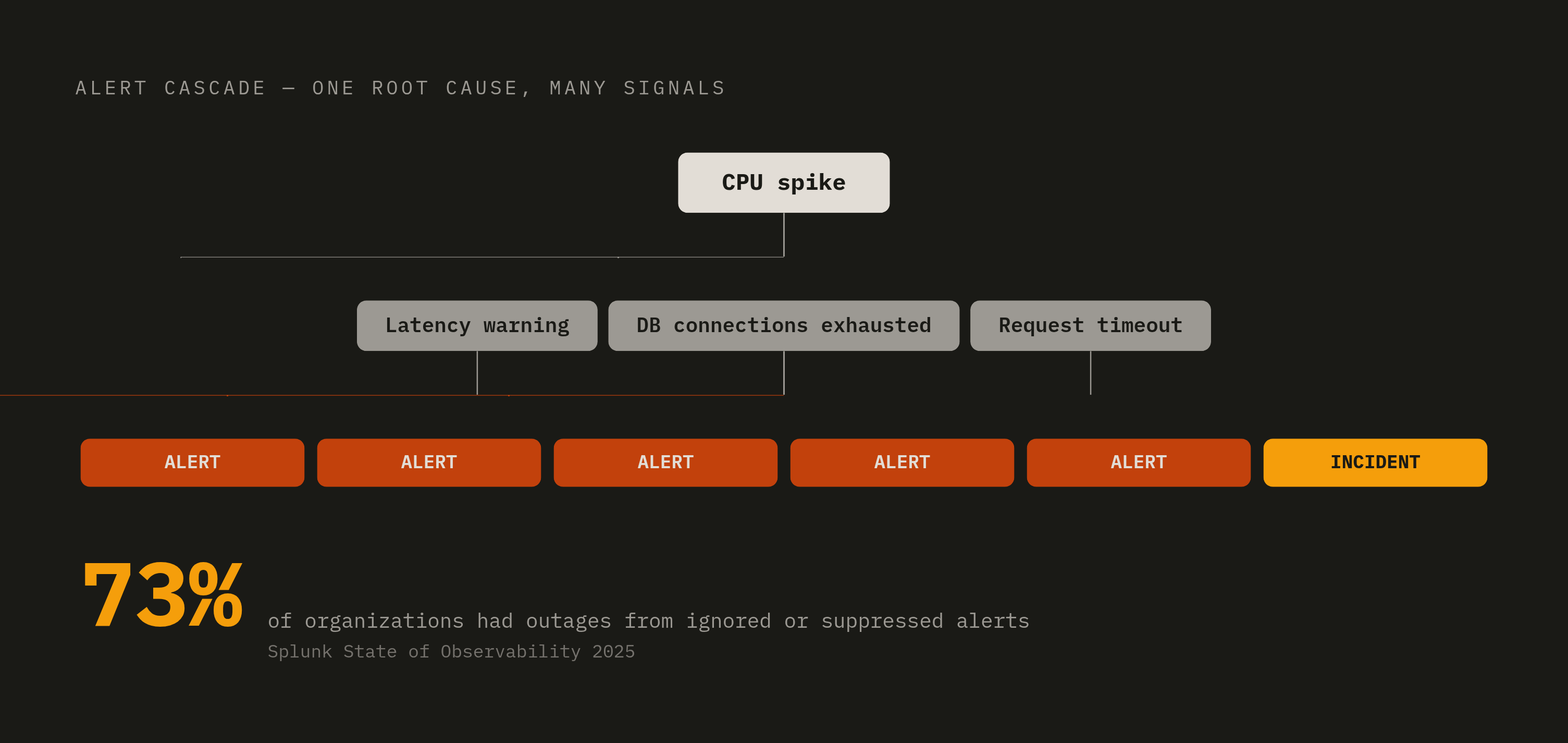
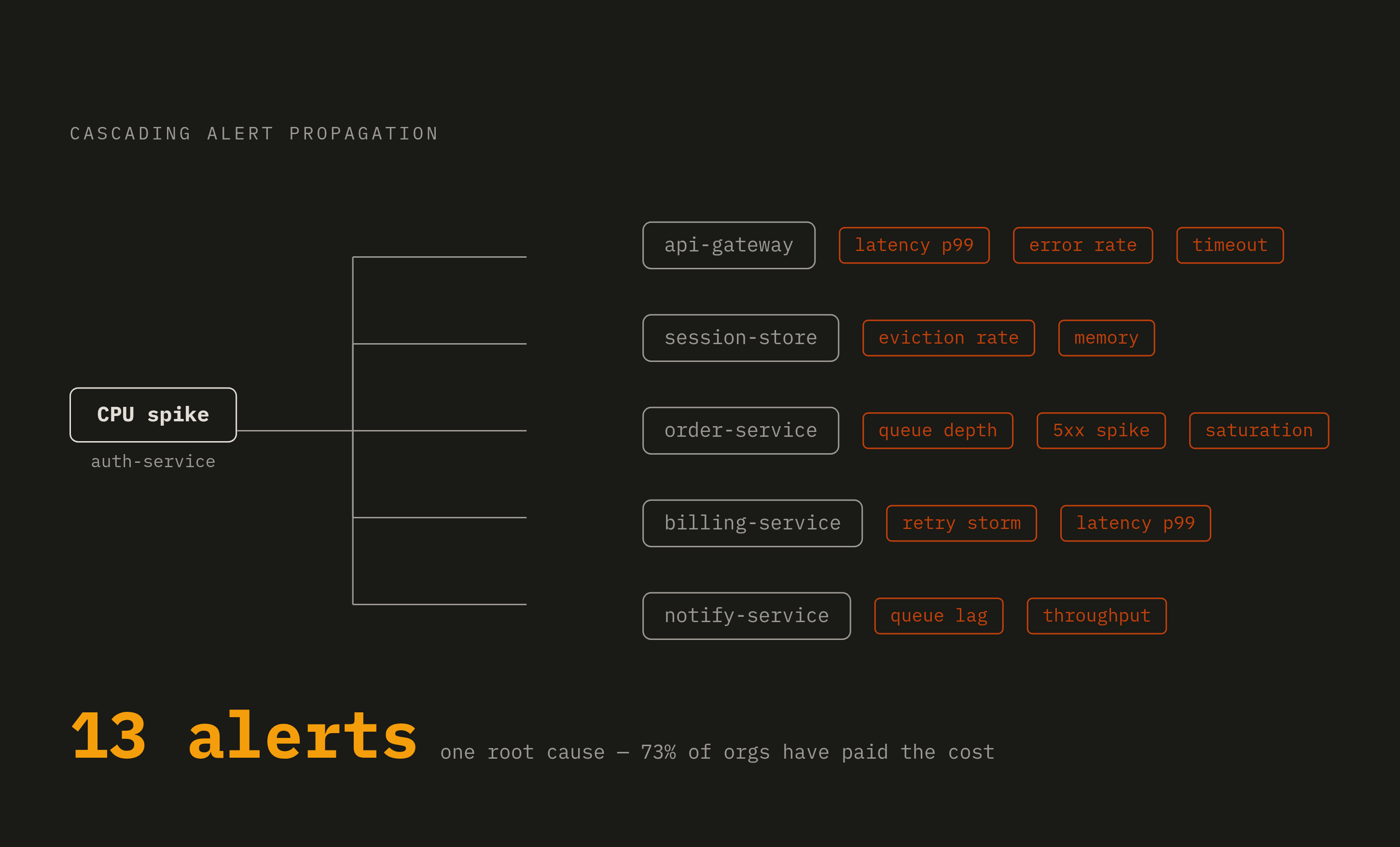
Cascading failure is the clearest example. A CPU spike in one service triggers latency warnings downstream, which exhausts database connections somewhere else, which times out a user-facing request three services away. One root cause, a storm of symptoms downstream of it. No integration test built around isolated request-response pairs was ever going to model that chain.
Race conditions are invisible at test scale, full stop, because production concurrency opens timing windows that a sequential or low-concurrency test run never hits. The window only opens once enough requests land close enough together in real time.
Third-party services don't behave in a sandbox the way they behave at scale, either. Cloud provider APIs, managed databases, external vendors: the sandbox tier and the production tier are not the same system, and real error injection at production volume surfaces failure paths a sandbox never triggers. Configuration-dependent failures compound this. A flag only enabled in the live environment, a certificate quietly approaching expiration, a rate limit that only trips at request volumes nobody bothers generating in a test run.
Data shape is its own category of trouble. Production databases carry years of accumulated edge cases, malformed-but-tolerated records, legacy fields nobody ever cleaned up, while synthetic test data is, by design, too tidy to represent any of it. And deployment order introduces a failure mode staging structurally can't produce: during a rolling deploy, service A may briefly run against a service B that hasn't finished upgrading, so two versions of the same service coexist for a few minutes and disagree with each other the whole time.
None of this is exotic. It's the ordinary material of on-call queues, week after week, the stuff that shows up in the retro nobody wants to write.
What observability closes that testing leaves open
A CNCF survey found 78% of organizations running microservices in production named observability gaps as their top operational challenge. That's the norm across the industry, not a symptom confined to one sloppy team.
The three-pillar model, logs, metrics, distributed traces, exists because no single signal answers the question that matters mid-incident: where did this request fail, and why? Metrics tell you something's wrong, and logs tell you what one service said at one moment. Neither reconstructs the path of a single request across fifteen services on its own, and that's what distributed tracing is for. Without it, engineers rebuild that path by hand, hopping between dashboards that were never designed to talk to each other in the first place.
This manual sequence is a familiar one: an on-call engineer gets paged, opens a metrics dashboard, spots the anomaly, pivots to a log search tool, then opens a tracing UI to try to stitch the three together. Three tools, manual correlation, clock running the whole time.
Release verification is the discipline built specifically to catch regressions earlier, comparing system behavior before and after a deploy rather than waiting for a page. That's codified practice now, backed by real tooling rather than an aspiration somebody's still pitching. CI passing tells you the code behaved correctly against whatever assumptions the test suite encoded, but it says nothing about how the system behaves once real traffic hits it. Production telemetry is the only signal that tells you the truth after the fact, and treating a green CI run as sufficient on its own is where most of this trouble starts.
How alert volume from microservices overwhelms the teams watching those signals
Alerting tools inherited their design from an earlier, simpler era, back when failure modes were fewer and more isolated from each other. They fire per metric, per service, per threshold, one alert at a time, because that's the world they were built for.
Microservices break that assumption immediately. A single root cause inside a cascading failure can trigger dozens of correlated alerts across every downstream service at once. That storm isn't evidence of sloppy alert configuration. It's a direct symptom of how the architecture spreads failure across a dependency graph nobody can hold in their head anymore.
Splunk's State of Observability 2025 found 73% of organizations had experienced outages linked to ignored or suppressed alerts. Teams learn, reasonably enough, to tune out noise they can't act on, and the one real incident buried inside that noise gets missed along with everything else. Catchpoint's 2025 research put a number on the human cost: nearly 70% of SREs said on-call stress contributed to burnout and attrition. That's not just a productivity drag. It's pushing experienced people out of the exact roles that need them most.
Tooling that hands engineers the noise and expects them to sort it by hand, at 3 a.m., against a service-level agreement they didn't write, isn't really tooling. It's a liability with a dashboard attached.
What automated post-deploy verification changes about how regressions get caught
Once you accept that CI and staging can't see what production sees, the question worth asking changes shape. Not "did the tests pass before we shipped," but "does production still behave the way we expect now that it's actually out there."
Automated production verification answers that directly. It compares real telemetry, error rates, latency distributions, throughput, downstream dependency health, across a window before and after a specific deploy, tied back to the pull request that caused it. That closes the staging-drift problem outright, because the system gets watched as it actually runs rather than simulated. It closes the mock-drift problem the same way, since the real downstream services are the ones answering, not an approximation someone wrote weeks earlier.
AIOps techniques applying dynamic baselines and correlated grouping to telemetry have reported dramatic noise reduction in vendor studies, turning what used to be an alert storm into something closer to one legible signal. A multi-agent LLM framework tested across more than 50 microservice production-replica environments, described in the International Journal of Intelligent Engineering and Systems, reported root cause identification accuracy above 90%, against a manual baseline closer to two-thirds, and cut mean time to diagnosis from roughly 47 minutes down to under 9.
OnePatch works in this exact space. It checks every pull request against real production telemetry after deploy, catches regressions before a human gets paged, and opens a fix pull request when something breaks. A person still reviews and merges that fix, rather than starting from zero in a war-room Slack thread.
Where agentic development makes automated post-deploy verification non-negotiable
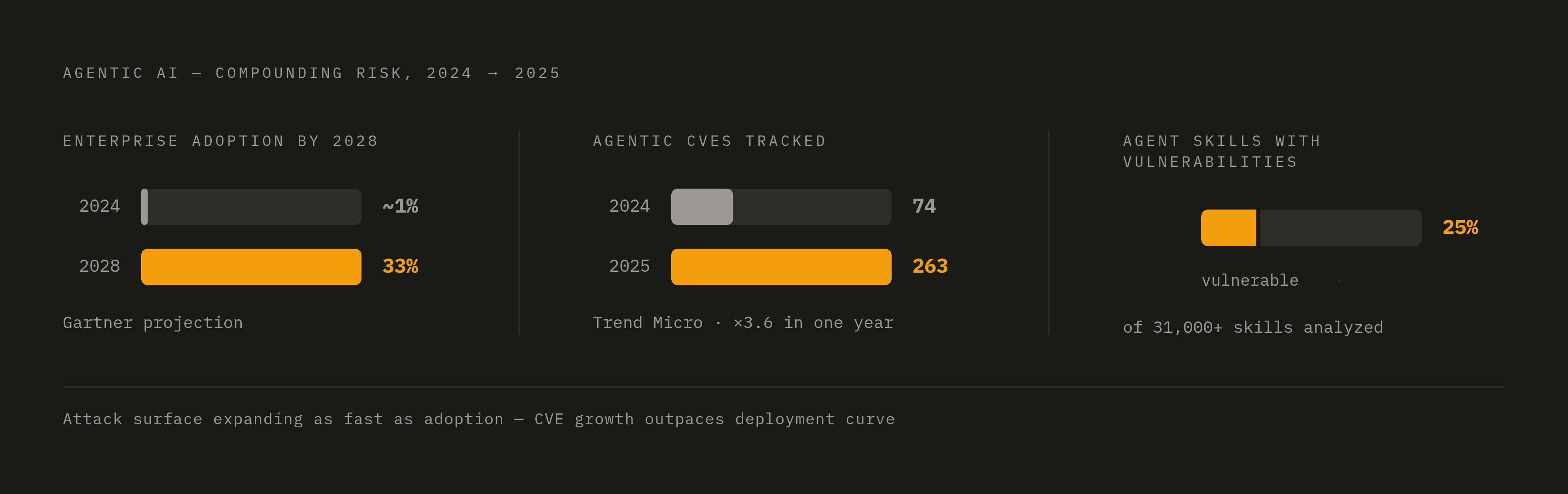
Agentic development changes this math, and fast. Gartner projects that by 2028, 33% of enterprise applications will incorporate some form of agentic AI, up from roughly 1% in 2024. That's a lot of code landing in production that no person wrote line by line.
AI-generated code carries its own risk profile, and the data backs that up. An analysis of over 31,000 AI agent skills found roughly a quarter contained at least one security vulnerability, and earlier research into Copilot found close to 40% vulnerable output in security-relevant scenarios. MIT's 2025 AI Agent Index, cataloguing 30 prominent agents, found 25 of the 30 disclosed no internal safety results, and 23 of the 30 had never gone through third-party testing. The agents writing the code are themselves largely unvalidated; the vulnerability numbers just say that plainly. Trend Micro tracked agentic CVEs climbing from 74 in 2024 to 263 in 2025. The attack surface is growing about as fast as adoption is, maybe faster.
Testing AI-generated components also demands things integration tests were never built to check: non-deterministic behavior, response stability across varied inputs, consistency across repeated runs of the same task. A suite built around deterministic expectations doesn't have a good answer for a system that behaves a little differently every time you run it.
Speed is what makes this urgent instead of theoretical. Agents ship pull requests faster than people can review them, and a manual post-deploy check, run on a human review cadence, can't keep pace with merges happening at agent speed. Automated production verification is the safeguard that scales with that pace, catching what a review window has already been outrun by. This is the condition where the distance between "CI passed" and "production is fine" gets both widest and most expensive, and it's only going to widen further as agent-written code becomes the norm rather than the exception.
What teams should expect from a post-deploy verification layer and how to evaluate one
Start with one question: can your current tooling tell you, for a specific pull request, whether production behavior changed after that deploy went out? If getting an answer means a person manually stitching together three or four dashboards, the gap is still open, no matter what the observability budget looks like on paper.
A verification layer worth adopting does a small number of things well. It compares pre- and post-deploy telemetry windows automatically, scoped to the deploying service and everything downstream that depends on it, and it cuts noise well enough to separate a genuine deployment-caused regression from background variance and cascading false alarms. It names the change that caused the problem, not just the symptom that surfaced three services later. And it offers a path to a fix that doesn't require assembling a war room, ideally a reviewable pull request opened on its own rather than a page sent to whoever's unlucky enough to be on call that week.
Tool sprawl is its own risk, separate from whatever any individual tool does well. Every extra tab an engineer opens during an active regression is time coming straight out of the error budget. A verification layer that still requires manually correlating output across six or seven tools has defeated its own purpose before it started.
Worth checking the incentives too, and this gets overlooked more than it should. A vendor priced per incident resolved is optimized differently than one priced per seat regardless of outcome, so ask directly which one you're buying. OnePatch ties pricing to incidents resolved rather than seats provisioned, on the reasoning that a verification tool should get paid for doing the thing it claims to do, not for how many people happen to have a login.
The integration test suite still earns its keep. It still catches a real class of bugs before they ever reach a deploy, and that value hasn't gone anywhere. But the argument now is narrower: a green CI run is necessary, it's never been sufficient, and production verification is the layer that closes the distance between the two. Treating one as a substitute for the other was always the mistake. They were built to sit side by side.